
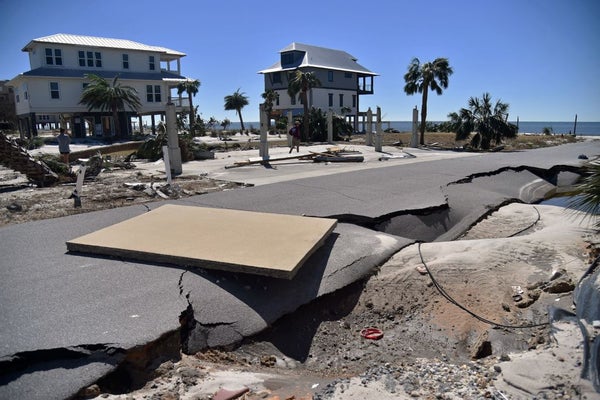

It seems the news has no shortage of extreme weather events: wildfires raged across Greece and the northwestern United States, flooding washed out the northeastern US, and intense heatwaves blanketed Japan and the United Kingdom. The island of Puerto Rico is facing down another hurricane season while many areas only recently regained power after Hurricane Maria devastated the island in 2017.
If it feels like we are hearing about extreme weather events more and more frequently now, it’s because we are. Large fires are now five times more common and fire season lasts three months longer than 40 years ago. The most intense rainstorms have increased by as much as 70% in the last 50 years and the city of Houston, Texas has seen three five-hundred-year floods—that is, floods so intense they are only expected to happen once every 500 years—in the last 3 years.
On supporting science journalism
If you're enjoying this article, consider supporting our award-winning journalism by subscribing. By purchasing a subscription you are helping to ensure the future of impactful stories about the discoveries and ideas shaping our world today.
What does science say about the link between climate change and this increase in extreme weather? Can we attribute a single event, like a particular heat wave or wildfire or flood, to climate change?
Linking Climate Change and Extreme Weather
Global temperatures are rising. This fact is indisputable. Temperatures are also rising at the same time that extreme weather events are increasing across the globe. But as any scientist’s favorite warning tells us: correlation does not equal causation. Just because it seems to rain every time I forget my umbrella doesn’t mean I’m actually making it rain with my poor memory function. We’ve also seen a significant decrease in the number of seafaring pirates in the last several decades as temperatures have continued to rise, but that does not mean we all need to reconsider piracy as a profession in our efforts to find a viable solution to climate change.
So to understand whether or not climate change and extreme weather events are linked, we have to look at the physics behind their possible connections and not just the fact that they are occurring at the same time. It turns out, the strengths of those connections vary with different kinds of extreme weather.
»Continue reading “Are Extreme Weather Events Linked to Climate Change?” on QuickAndDirtyTips.com