
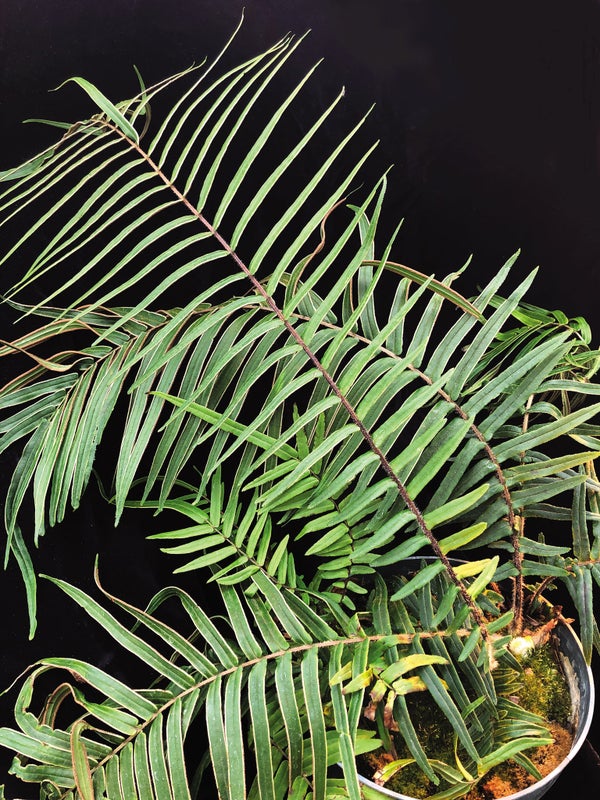
Arsenic-contaminated groundwater and soil affect millions of people worldwide; the substance can cause skin lesions, cancer and other illnesses if it gets into drinking water and crops. But the Chinese brake fern, Pteris vittata, naturally accumulates arsenic levels that would kill most other organisms—and somehow it continues to thrive. The mechanism behind this tolerance has long been a biochemical puzzle.
Now plant researchers Jody Banks and Chao Cai, both at Purdue University, and their colleagues have explained how it happens. By splicing the fern's genes into other plants, Banks says, bioengineers might one day harness its abilities to help clean up contaminated areas.
Banks had noticed that three of the fern's genes become more active when it encounters arsenic. To test whether they are behind its tolerance, she used a common biological technique to turn each gene “off” in several samples—which died when exposed to the poison. Then she and her team used a microscope to track the proteins these genes encode in the species, reconstructing how the proteins work together to collect and neutralize arsenic as it moves through the plant's fronds.
On supporting science journalism
If you're enjoying this article, consider supporting our award-winning journalism by subscribing. By purchasing a subscription you are helping to ensure the future of impactful stories about the discoveries and ideas shaping our world today.
One of the proteins, GAPC1, is found in many organisms and uses phosphate to help break down sugars for energy. Arsenate, the form of arsenic found in soil, is toxic because it replaces phosphate in this process, blocking energy production. But in the fern, GAPC1 has a slightly different structure that allows it to chemically bind arsenate. Another protein called OCT4, encoded by one of the other genes, helps to shuttle the trapped arsenate across membranes into tiny structures called vesicles within the cell. Inside the vesicles the protein GST—encoded by the third gene—transforms arsenate into a form called arsenite. The vesicles transfer this compound to parts of the plant where it safely accumulates as a defense against hungry insects, the researchers found. Their study was published in May in Current Biology.
In 2016 biochemist Barry Rosen of Florida International University, who was not involved in the new study, identified a process for trapping and neutralizing the poison in an arsenic-tolerant bacterial species, Pseudomonas aeruginosa, that used nearly identical genes. Whereas the fern traps arsenite in specialized cells, the bacteria pump it back out into the environment. “Demonstrating that this very novel mechanism applies to plants as well as bacteria,” Rosen says, “shows that organisms have evolved a way to get around the major way that arsenate is toxic.”