
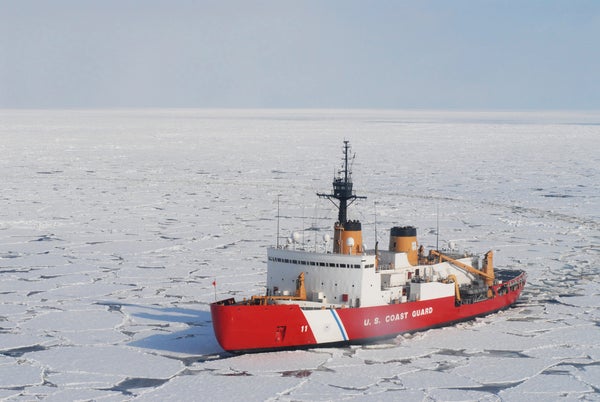
Climate change is causing the U.S. military to alter its plans in the Arctic as Russia takes advantage of a warming world to deploy radar and personnel in thawing regions, two generals told a Senate panel yesterday.
The assessment comes as the White House is recruiting researchers to raise uncertainty about climate science and the risk that rising temperatures pose to national security. The generals told the Senate Armed Services Committee yesterday that climate change is already affecting the military.
In particular, the reduction of Arctic sea ice means the United States is competing in the North with nations like Russia and China for resources and strategic advantage, said Army Gen. Curtis Scaparrotti, commander of the U.S. European Command. He said Russia is already moving weapons into the region and that U.S. forces have had to change their posture as a result.
On supporting science journalism
If you're enjoying this article, consider supporting our award-winning journalism by subscribing. By purchasing a subscription you are helping to ensure the future of impactful stories about the discoveries and ideas shaping our world today.
“Russia, because that Northern Sea Route is the one that follows most closely to their borders, has ... reopened 10 of their airports there,” he said. “They now have radar systems up. They’ve begun to move, on periodic times, different weapons systems up there for control of the area. So, those are all things that I have to bring into my planning.”
He was responding to questions by Sen. Elizabeth Warren (D-Mass.), a presidential candidate who seemed to be building the case against the White House’s plan to discredit global warming as a national security risk. She asked similar questions of Army Gen. Stephen Lyons, commander of the U.S. Transportation Command.
Warren recited portions of a report by the intelligence community released earlier this year. It found that climate change would create “competition for resources, economic distress, and social discontent” throughout the world.
“I’ve asked this question to other combatant commanders, so I want to make sure that I get this on the record. Gen. Scaparrotti and Gen. Lyons, do you agree with the intelligence community’s assessment of the climate change threat?” Warren asked.
“I do, and I believe that, as you noted, much of this will be drivers for potential conflict, or at least very difficult situations that nations have to deal with,” Scaparrotti responded.
Lyons said he agreed that climate change poses a series of challenges to military operations.
“Anything that degrades our ability to project and sustain power globally at our time and place of choosing is a concern, and we know that we have to operate in any conditions whatsoever,” he said.
Reprinted from Climatewire with permission from E&E News. E&E provides daily coverage of essential energy and environmental news at www.eenews.net.