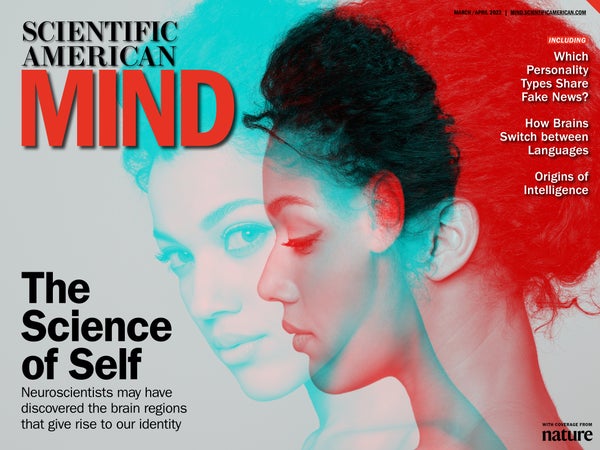
Human consciousness remains one of the biggest puzzles in science. Indeed, we have made moderate progress on how to measure it but less on how it arises in the first place. And what gives rise to our sense of self? In February we published a special collector’s edition exploring these mysteries and more. This issue’s cover story, by researcher Robert Martone, is a fascinating look at new discoveries on a region of the brain that helps us create a mental picture of our present and future identities (see “How Our Brain Preserves Our Sense of Self”).
Elsewhere in this issue, contributing editor Daisy Yuhas talks with linguist Sarah Frances Phillips about new research illuminating the neurological basis for multilingualism (see “How Brains Seamlessly Switch between Languages”). How the brain both creates our individual reality and enables us to thrive in that reality is nothing short of astonishing.
Subscribe to Support Independent Journalism
Great science journalism requires human expertise, time, effort and creativity. And it costs money. That’s why I and the journalists here at Scientific American hope you’ll join our community.
When you subscribe, you are supporting staff and freelance journalists who are passionate about telling science stories that are true, important and compelling. Our editors and reporters are often experts in their fields, which means they understand the nuances of big discoveries and can untangle the breakthroughs from the hype. With a subscription, you are also supporting rigorous fact-checking to ensure the words we publish are precise and accurate. And you’re supporting original illustrations, graphics and photos that bring you closer to an advanced laboratory, an ice sheet in Antarctica or a space mission in orbit. You’re helping us craft other types of high-quality journalism as well: Our newsletters are carefully written, edited and curated by staffers you have or will come to know and love. Our Science Quickly podcast is based on original reporting, collaboration with editors and scientists and exacting production.
Subscriptions keep this engine running so we can continue to deliver thoughtful, rigorous and independent science journalism to you. In an era of viral misinformation, this work is crucial. If you value what we do, I hope you’ll consider joining us as a subscriber
Thank you,
Jeanna Bryner, Editor in Chief, Scientific American