
Neuroscientists know a lot about how individual neurons operate but remarkably little about how large numbers of them work together to produce thoughts, feelings and behavior. They need a wiring diagram for the brain—known as a connectome—to identify the circuits that underlie the organ’s functions.
Now researchers at Cold Spring Harbor Laboratory and their colleagues have developed an innovative brain-mapping technique and used it to trace the connections emanating from nearly 600 neurons in a mouse brain’s main visual area in just three weeks. This technology could someday be used to help understand disorders thought to involve atypical brain wiring, such as autism or schizophrenia.
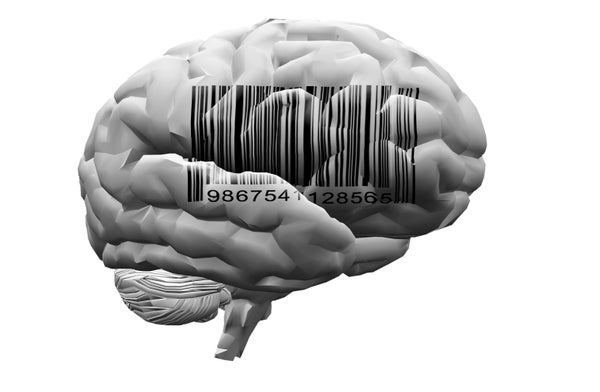
The technique works by tagging cells with genetic “bar codes.” Researchers inject viruses into mice brains, where the viruses direct cells to produce random 30-letter RNA sequences (consisting of the nucleotide “letters” G, A, U and C). The cells also create a protein that binds to these RNA bar codes and drags them the length of each neuron’s output wire, or axon. The researchers later dissect the mice brains into target regions and sequence the cells in each area, enabling them to determine which tagged neurons are connected to which regions.
On supporting science journalism
If you're enjoying this article, consider supporting our award-winning journalism by subscribing. By purchasing a subscription you are helping to ensure the future of impactful stories about the discoveries and ideas shaping our world today.
The team found that neurons in a mouse’s primary visual cortex typically send outputs to multiple other visual areas. It also discovered that most cells fall into six distinct groups based on which regions—and how many of them—they connect to. This finding suggests there are subtypes of neurons in a mouse’s primary visual cortex that perform different functions. “Because we have so many neurons, we can do statistics and start understanding the patterns we see,” says Cold Spring Harbor’s Justus Kebschull, co-lead author of the study, which was published in April in Nature.
The bar-coding method represents a major leap for connectome mapping. With just 30 nucleotides, a researcher can generate more unique sequences than there are neurons in the brain, says neuroscientist Botond Roska of the Institute of Molecular and Clinical Ophthalmology Basel in Switzerland, who was not involved in the work: “I predict that as this technology matures, it will be a key way we analyze brain connectivity.”