
CLIMATEWIRE | The U.S. Department of Transportation on Wednesday announced $1.8 billion in funding from the bipartisan infrastructure law to improve roads, public transit and ports in all 50 states.
The projects, 148 in all, are the third wave of a five-year program to fund smaller, often community-oriented projects that span jurisdictions and involve multiple modes of transport.
The administration unveiled its largesse one day before President Joe Biden debates his presumptive Republican opponent, former President Donald Trump. Secretary of Transportation Pete Buttigieg seemed to anticipate one of Trump’s likely attack lines — that inflation and prices have gone up on Biden’s watch — by saying some projects would lower prices by getting goods to market more easily.
On supporting science journalism
If you're enjoying this article, consider supporting our award-winning journalism by subscribing. By purchasing a subscription you are helping to ensure the future of impactful stories about the discoveries and ideas shaping our world today.
Buttigieg said the projects would “improve everyday life and the cost of living in communities across the country.”
The administration’s climate and energy priorities played supporting roles in several grants.
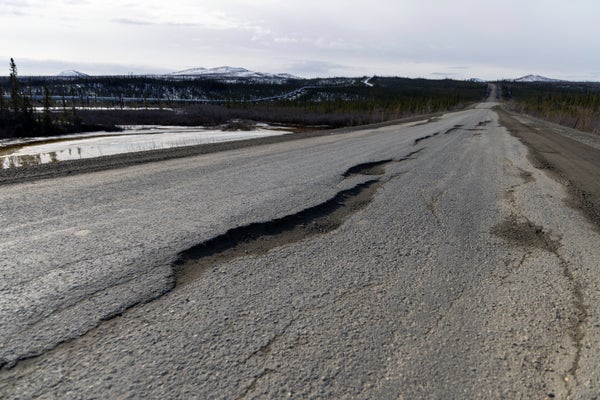
For example, one of the biggest-ticket projects — a $25 million rebuilding project for sections of the Alaska Highway — is intended to repair damage caused by permafrost melting amid higher temperatures. Another $3 million will create a master plan to improve the port in Pago Pago, in American Samoa, including protecting it against rising ocean levels. Still another will use more than $7 million to create evacuation routes and storm-proof roads in Plaquemines and Jefferson parishes on the low-lying coast of Louisiana.
Others involve zero-emission vehicles, like a $23.5 million grant for Downeast Transportation, a transit agency in coastal Maine, to buy 24 electric buses along with charging infrastructure.
In Portland, Oregon, the regional bus network will receive $25 million to construct a depot for hydrogen fuel cell buses, including storage tanks for the highly combustible fuel.
This year’s projects are about half rural and half urban, Buttigieg said. In all, 57 percent are for roadways and 22 percent for bike and pedestrian paths, with the remainder for transit, rail and aviation projects.
Reprinted from E&E News with permission from POLITICO, LLC. Copyright 2024. E&E News provides essential news for energy and environment professionals.