
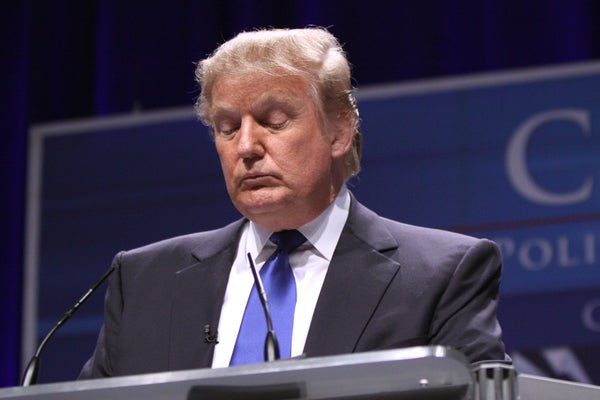
WASHINGTON—Should President Donald Trump make drug makers relieved? Or anxious?
They’re not sure.
On the one hand, it was Clinton who pledged repeatedly to crack down on prescription drug prices during the campaign. It was a Democratic takeover of Washington that was considered the drug industry’s “worst-case scenario.” Republicans now fully control the federal government.
On supporting science journalism
If you're enjoying this article, consider supporting our award-winning journalism by subscribing. By purchasing a subscription you are helping to ensure the future of impactful stories about the discoveries and ideas shaping our world today.
And yet.
Trump broke with conservative orthodoxy when he said he wants Medicare to directly negotiate the prices it pays for prescription drugs. He endorses price transparency for the entire health care system. He supports allowing drugs to be imported from other countries. All of those policies are vigorously opposed by drug makers.
And he’s vowed to take on the powerful pharma lobby.
Drug costs weren’t a priority for Trump on the campaign trail, and his populist tendencies may be tempered by House Speaker Paul Ryan and Senate Majority Leader Mitch McConnell.
But that’s the thing. It’s impossible to be sure.
“Tell me truly where Trump would head on any particular health care position,” one lobbyist with pharmaceutical clients, who requested anonymity to speak candidly about the outlook for these clients, told STAT before the election.
Despite that uncertainty, others expect Trump to govern more or less as a traditional Republican. He and conservative leaders have promised to repeal and replace the Affordable Care Act. The current GOP-controlled Congress has been working on legislation this past year to speed up approvals of drugs and devices at the Food and Drug Administration (a bill that has plenty of Democratic support as well).
More likely than not, Trump and Republicans on Capitol Hill will focus on “injecting more free market principles into the health system as we know it,” said Ben Isgur, who analyzed the election’s health care implications for PricewaterhouseCoopers.
But Trump still has to deal with the widespread anxiety about drug costs that led Clinton to make them a campaign priority. An overwhelming number of Americans believe drug costs are unreasonable and the government should do something to address them, polling has repeatedly found.
“How are you going to respond to these consumers and make health care more affordable?” Isgur said. “This is front and center for the new president and the new administration.”
Several drug lobbyists said they worried that they could lose support on their right flank after Trump endorsed allowing Medicare to negotiate drug prices, a position that is usually anathema to traditional conservatives. The most populist members of the GOP, such as the House Freedom Caucus, may now feel empowered by Trump’s unexpected victory.
This is President-elect Donald Trump’s party now.
“I actually think the Republican Party is a far less certain bet for the pharmaceutical industry,” another industry official told STAT, citing “the rise of populism in both parties.”
The official, who also asked not to be named in order to speak candidly, spoke wistfully of ousted House Speaker John Boehner and House Majority Leader Eric Cantor.
“They were productive allies for the industry,” the official said. “But I’m not sure what the future of the Republican Party looks like.”
Republicans have also been yearning to slow the growth of Medicare and Medicaid spending. They want to turn the latter into a block-grant program, but that won’t solve the former’s fiscal situation. GOP leaders could see curbing drug costs as one way to reduce government spending.
But this is all speculative. Most of Washington and the industry has spent the last few months expecting a President Hillary Clinton.
Contemplating a Clinton presidency prior to the election, the drug lobbyist said: “It’s not like you’d have something coming out of totally left field.”
The lobbyist then added, almost as an afterthought: “Like you could have with Trump.”
Republished with permission from STAT. This article originally appeared on November 9, 2016