
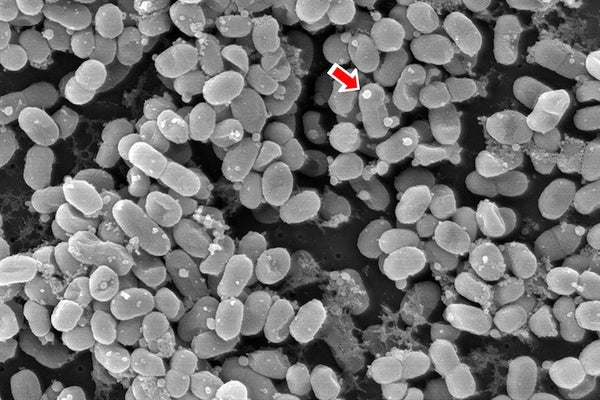
No, you won’t see chocolate pudding cups next time you swim in the sea. These “snack packets” are microscopic carbon-filled parcels, or vesicles, released by marine bacteria.
Vesicles are organlike structures usually found inside cells that serve as a place to store materials or isolate chemical reactions, such as during metabolism. Now postdoc Steven Biller and researchers at Massachusetts Institute of Technology have learned that all sorts of marine bacteria produce extracellular vesicles containing carbon, nutrients, chemicals and genetic material, which other oceanic organisms eat.
Why marine microbes would give up vesicles comprising one sixth of their body weight is not clearly understood—perhaps to eliminate toxic chemical waste or spread their genetic material to other organisms or distract attacking viruses. Whatever the reasons, the vesicles play a big role in the marine food chain.
On supporting science journalism
If you're enjoying this article, consider supporting our award-winning journalism by subscribing. By purchasing a subscription you are helping to ensure the future of impactful stories about the discoveries and ideas shaping our world today.
Marine water contains a huge number of such extracellular vesicles, the researchers found. One genus, Prochlorococcus, secretes about a billion billion billion vesicles into the ocean every day. Vesicles have been found in throughout the world’s oceans, from rich waters such as those off the New England coast to nutrient-poor areas like the Sargasso Sea. The vesicles add a substantial supply of carbon and nutrients to the sea, which helps keep the food chain functioning.
—Annie Sneed