September 1, 2022
1 min read
 Add Us On GoogleAdd SciAm
Black Hole Mysteries Solved
Recent theoretical and observational results have revealed new secrets about these shadowy objects, with deep implications for more than just black holes themselves
By Clara Moskowitz
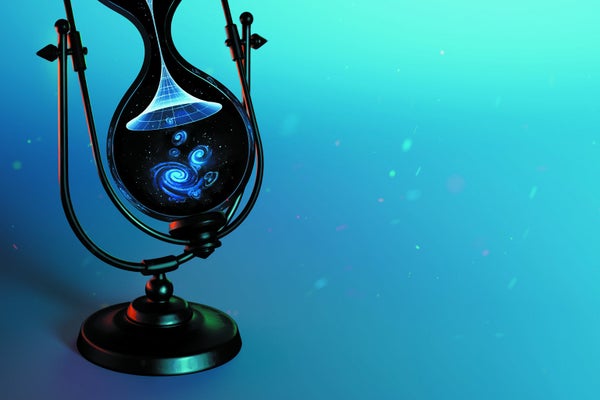
To many people, black holes evoke a mysterious darkness threatening to swallow you up. To scientists, they have sometimes seemed like the mystery that might swallow physics. They awkwardly bridge the theories of quantum mechanics and general relativity, exposing deep weaknesses in our understanding of nature. But recent theoretical and observational advances have helped illuminate these shadowy objects, with profound implications for more than just black holes themselves.
George Musser describes how physicists have made breakthroughs toward resolving a decades-old quandary called the black hole information paradox. One of the physicists involved in this work, Ahmed Almheiri, explains the mind-bending solution. Another physicist, Edgar Shaghoulian, discusses how these insights may even help scientists better understand the cosmos as a whole. And Seth Fletcher writes about the Event Horizon Telescope, which has captured the first image of the black hole at the center of the Milky Way. Black holes are starting to look a little less dark and enigmatic.
Subscribe to Support Independent Journalism
Great science journalism requires human expertise, time, effort and creativity. And it costs money. That’s why I and the journalists here at Scientific American hope you’ll join our community.
When you subscribe, you are supporting staff and freelance journalists who are passionate about telling science stories that are true, important and compelling. Our editors and reporters are often experts in their fields, which means they understand the nuances of big discoveries and can untangle the breakthroughs from the hype. With a subscription, you are also supporting rigorous fact-checking to ensure the words we publish are precise and accurate. And you’re supporting original illustrations, graphics and photos that bring you closer to an advanced laboratory, an ice sheet in Antarctica or a space mission in orbit. You’re helping us craft other types of high-quality journalism as well: Our newsletters are carefully written, edited and curated by staffers you have or will come to know and love. Our Science Quickly podcast is based on original reporting, collaboration with editors and scientists and exacting production.
Subscriptions keep this engine running so we can continue to deliver thoughtful, rigorous and independent science journalism to you. In an era of viral misinformation, this work is crucial. If you value what we do, I hope you’ll consider joining us as a subscriber