
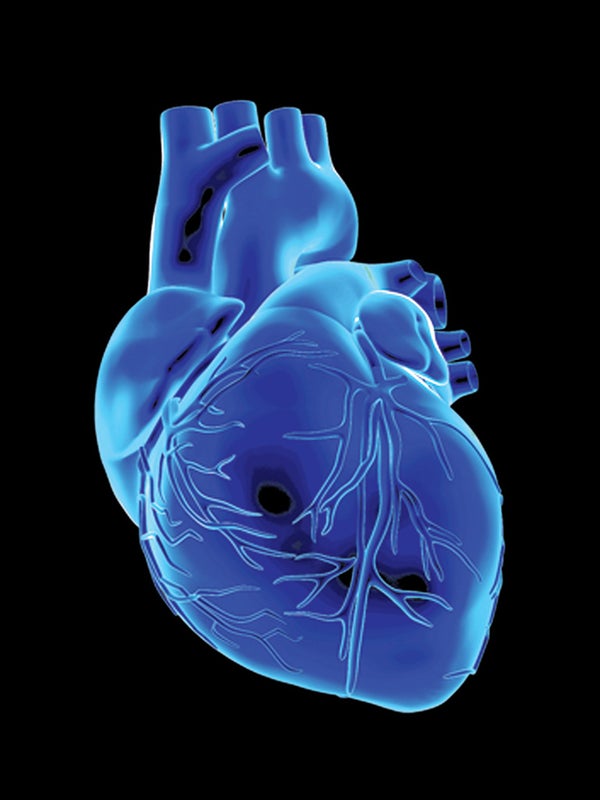
Having heart transplant surgery is daunting enough. But in the months afterward the body's immune system sometimes attacks the donor organ, which can have deadly consequences. To check for inflammation (a sign of organ rejection), doctors have to snip and analyze a sliver of tissue from the recipient's new heart—typically about 16 times in the first year. “There is a risk of damage during the procedure, and the results are far from reliable, yet [such] biopsies are the current gold standard,” says cardiovascular medicine researcher Hannah Valantine of Stanford University.
But a new DNA-based blood test could give doctors crucial time to prevent sudden, early rejection of transplanted hearts. It would reduce the number of required invasive biopsies by about 80 percent, according to a study published in Circulation.
For each transplant in the study, co-author Valantine and her colleagues used blood samples to identify small genetic differences between heart donors and recipients. After the transplant, the researchers measured the percentage of donor-derived DNA in the recipients' blood plasma. Injured or dying cells from a transplanted heart release more donor DNA fragments than healthy cells do, so higher amounts of donor DNA imply a higher risk of rejection. With early warning doctors can start medical treatment to reverse the situation. The study analyzed blood samples from 171 recent transplant recipients and found rejection is likely when more than 0.25 percent of detected DNA is from the donor. The test provided a clearer signal and picked up rejection signs earlier than tissue biopsies did. It also revealed much earlier signs of a pernicious type of rejection, called antibody-mediated rejection, that biopsies can miss.
On supporting science journalism
If you're enjoying this article, consider supporting our award-winning journalism by subscribing. By purchasing a subscription you are helping to ensure the future of impactful stories about the discoveries and ideas shaping our world today.
About 44 percent of the recipients in the study were Black. This was particularly important, Valantine says, because multiple studies have established that African-Americans have a high risk of rejecting donor organs of all kinds.
The test looks promising, but long-term clinical utility studies are needed to evaluate how treatments based on test results fare, says University of British Columbia medical researcher Scott Tebbutt, who was not part of the study. Noninvasive tests are invaluable, Tebbutt says, and “reducing the number of biopsies even by half is a significant improvement to the quality of the patients' lives.”