
Fiction
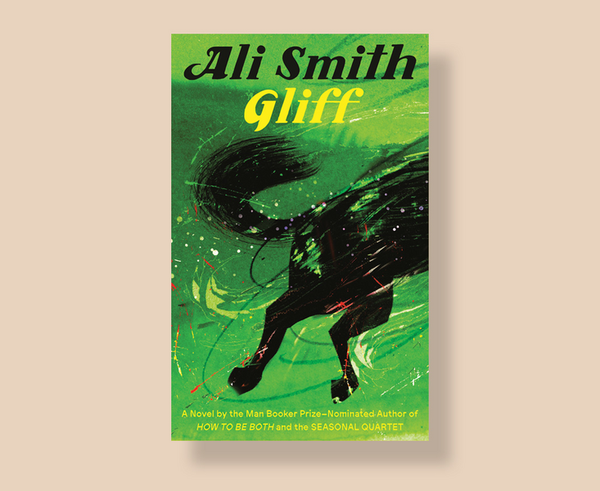
Gliff
by Ali Smith.
Pantheon, 2025 ($28)
In a totalitarian version of Great Britain, hovering somewhere in an adjacent present or near future, people are either worker drones or undesirables deemed “unverified” by a nebulous gray authority. This is the background of Gliff, a new novel from award-winning Scottish writer Ali Smith.
On supporting science journalism
If you're enjoying this article, consider supporting our award-winning journalism by subscribing. By purchasing a subscription you are helping to ensure the future of impactful stories about the discoveries and ideas shaping our world today.
Foreground and background are almost indistinguishable here. They fade through and past each other in this matter-of-fact, wordplay-loving liberation story, which is full of explicated and dissected terms, incidental etymologies, and puns. Smith’s didacticism is camouflaged in conversation, a series of clever lessons on the small histories of words and the mutability of language.
In the foreground, two children tumble through a cascade of abandonments, struggling to stay fed and find their footing in a city where, during the night, red lines may get painted around the place where they’re sleeping. They get separated first from the loving whistleblower mother who raised them, then from the man to whom she entrusted them, and finally and mysteriously from each other. Woven into this tapestry in an artful hodgepodge are glancing critiques of xenophobia, capital and soulless technocratic overlords—all keenly relevant to 2025 America, where, as the specter of mass deportation looms, it’s all too easy to read Smith’s dystopia as a fairly accurate description of the time we find ourselves living in.
But “dystopia” is probably a misnomer. Smith’s fictional decor features many imagined stylings, such as the literal lines of red paint and the “Supera Bounder” machines that draw them, but the surveillance state it conjures isn’t far removed from already existing forms of institutionally sanctioned observation and oppression. In the U.K., closed-circuit TV cameras are ubiquitous; in the U.S., private corporations have almost unlimited access to personal data; throughout the Global North, immigrants and refugees are increasingly being targeted for rejection or expulsion by hostile governments.
What Gliff suggests is that dystopia is no longer a counterfactual. It is now manifestly present and far-reaching, and it’s up to us to cast off our chains.