FICTION
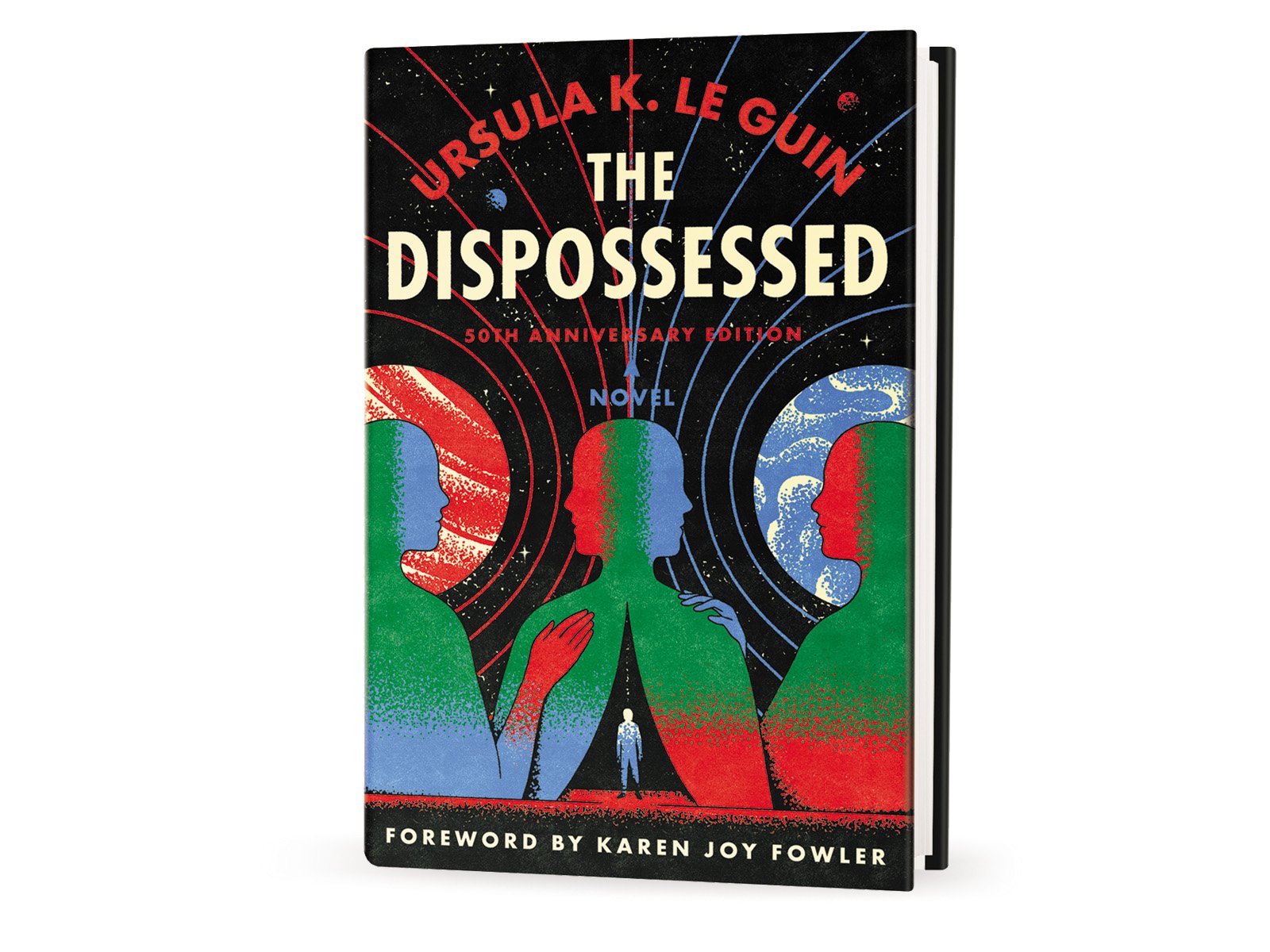
The Dispossessed: A Novel (50th Anniversary Edition)
by Ursula K. Le Guin.
Harper, 2024 ($35)
A little more than halfway through The Dispossessed, Ursula K. Le Guin’s inexhaustibly rich and wise science-fiction novel about a physicist caught between societies, the protagonist, Shevek, born and raised in an anarchist’s collective, gets drunk (for the first time) at a fancy soiree in a capitalist society on a planet not his own. There this brilliant but bewildered scientist gets cornered by a plutocrat with impertinent questions. What is the point of Shevek’s efforts to create a General Temporal Theory reconciling “aspects or processes of time”?
On supporting science journalism
If you're enjoying this article, consider supporting our award-winning journalism by subscribing. By purchasing a subscription you are helping to ensure the future of impactful stories about the discoveries and ideas shaping our world today.
Shevek explains that time in our perceptions is like an arrow, moving in one direction only. In the cosmos and the atom, however, it moves in circles and cycles, the “infinite repetition” an “atemporal process.”
“But what’s the good of this sort of ‘understanding,’” the plutocrat asks, “if it doesn’t result in practical, technological applications?”
The tensions Le Guin explores here—between the theoretical and the applicable, the scientist and society—have not diminished in the 50 years since The Dispossessed swept the Hugo, Locus and Nebula awards. The science in this 1974 novel—now reissued with a celebratory, pained-about-the-present introduction by literary writer Karen Joy Fowler—is vague, a physics explored through metaphor. But Le Guin’s depiction of a scientist caught between opposing, utterly convincing worlds remains thrilling in its precision, at times even frightening.
On the collectivist planet Anarres, a desert landscape ravaged by famine, Shevek’s search for a General Temporal Theory is thwarted by scientist-bureaucrats who are concerned his discoveries might prove counterrevolutionary. After engineering a diplomatic escape to lush Urras, funded by capitalist plenty, Shevek learns that his work is viewed as proprietary—a product. This perspective changes him. Shevek finds himself behaving like the patriarchal “propertarians” of Urras. Drunk and lonely, this gentle man whose language has no possessive pronouns seizes a woman as if she is his. It’s an act that later disgusts him—and sets him on a revolutionary course that will affect all the worlds that humanity has reached.
Le Guin, who died in 2018, leaves it to readers to make what they will of this shift. The arrow of time has sped forward since 1974, but the circles and cycles of Le Guin’s masterpiece continue to suggest, with urgent humanity, both present and future.