On supporting science journalism
If you're enjoying this article, consider supporting our award-winning journalism by subscribing. By purchasing a subscription you are helping to ensure the future of impactful stories about the discoveries and ideas shaping our world today.
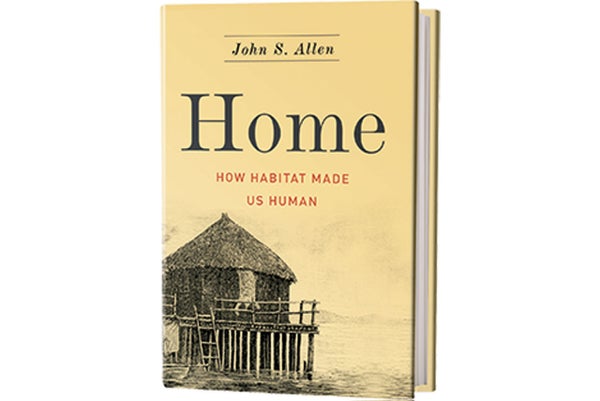
Home: How Habitat Made Us Human
by John S. Allen
Basic Books, 2016 (($28.99))
“Home is not simply a location on the landscape where a person lives; it has a privileged place in our cognition,” neuroanthropologist Allen writes. Whether you live in a tepee or a town house, “home” should ideally mean a sense of safety, comfort and well-being. It satisfies our need for shelter from the elements, a place to rest and recover, protection from predators and access to mates. The concept of home, Allen explains, divides the world in two: a domestic domain and everything else, simplifying the otherwise intimidating expanse around us. He investigates the neuroscience and psychology of “feeling at home” and how that feeling has granted an adaptive advantage to the human species, enabling the advances in culture and technology that separate us from our primate cousins. At a time when many people around the world lack a place to call their own, Allen shows why we all deserve one.
Subscribe to Support Independent Journalism
Great science journalism requires human expertise, time, effort and creativity. And it costs money. That’s why I and the journalists here at Scientific American hope you’ll join our community.
When you subscribe, you are supporting staff and freelance journalists who are passionate about telling science stories that are true, important and compelling. Our editors and reporters are often experts in their fields, which means they understand the nuances of big discoveries and can untangle the breakthroughs from the hype. With a subscription, you are also supporting rigorous fact-checking to ensure the words we publish are precise and accurate. And you’re supporting original illustrations, graphics and photos that bring you closer to an advanced laboratory, an ice sheet in Antarctica or a space mission in orbit. You’re helping us craft other types of high-quality journalism as well: Our newsletters are carefully written, edited and curated by staffers you have or will come to know and love. Our Science Quickly podcast is based on original reporting, collaboration with editors and scientists and exacting production.
Subscriptions keep this engine running so we can continue to deliver thoughtful, rigorous and independent science journalism to you. In an era of viral misinformation, this work is crucial. If you value what we do, I hope you’ll consider joining us as a subscriber