Book Review: Neuroscience

Books and recommendations from Scientific American

Join Our Community of Science Lovers!


On supporting science journalism

If you're enjoying this article, consider supporting our award-winning journalism by subscribing. By purchasing a subscription you are helping to ensure the future of impactful stories about the discoveries and ideas shaping our world today.


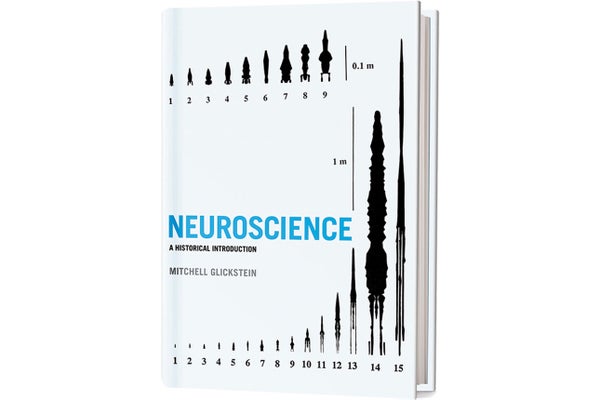
Neuroscience: A Historical Introduction
by Mitchell Glickstein
MIT Press, 2014 ($50)

Neuroscientists sometimes say, with a mix of awe and whimsy, that the brain is the most complex machine in the universe. Because the topic is such a weighty one, some of the books that introduce this discipline arrive with more heft than a 1988 laptop. Glickstein, a professor emeritus of neuroscience at University College London, takes a less daunting approach by conveying the stories of the scientific discoveries that have given us an understanding of the basics of vision, reflexes, learning and memory. He succeeds by relating the way scientists and clinicians have derived new insights from contemplating disease and injury in humans while probing the workings of the nervous systems of rats, flies and sea slugs. This approach provides understanding of neurons and the way pain, heat and taste are processed by the brain—and much more.

Gary Stix is the former senior editor of mind and brain topics at Scientific American.

More by Gary Stix
Scientific American Magazine Vol 312 Issue 3This article was published with the title “Neuroscience: A Historical Introduction” in Scientific American Magazine Vol. 312 No. 3 (), p. 72
doi:10.1038/scientificamerican0315-72c

It’s Time to Stand Up for Science

If you enjoyed this article, I’d like to ask for your support. Scientific American has served as an advocate for science and industry for 180 years, and right now may be the most critical moment in that two-century history.

I’ve been a Scientific American subscriber since I was 12 years old, and it helped shape the way I look at the world. SciAm always educates and delights me, and inspires a sense of awe for our vast, beautiful universe. I hope it does that for you, too.

If you subscribe to Scientific American, you help ensure that our coverage is centered on meaningful research and discovery; that we have the resources to report on the decisions that threaten labs across the U.S.; and that we support both budding and working scientists at a time when the value of science itself too often goes unrecognized.

In return, you get essential news, captivating podcasts, brilliant infographics, can't-miss newsletters, must-watch videos, challenging games, and the science world's best writing and reporting. You can even gift someone a subscription.

There has never been a more important time for us to stand up and show why science matters. I hope you’ll support us in that mission.

Thank you,

David M. Ewalt, Editor in Chief, Scientific American

Subscribe