
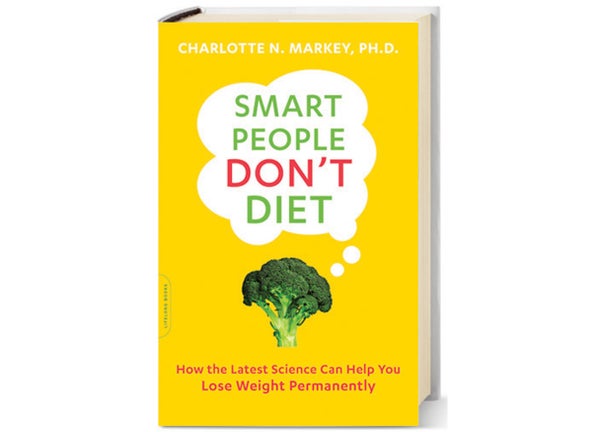
Smart People Don’t Diet
by Charlotte N. Markey
Da Capo Press, 2014 ($16.99)
Though not perfect, this is possibly the best book on weight loss ever written. Markey, a psychology professor who teaches a course called “The Psychology of Eating” at Rutgers University–Camden, is a true expert who has done what experts seldom do well. She has translated good science on eating and dieting into clear, friendly, informal language that virtually anyone with concerns about weight will find both interesting and helpful. Even more important, Markey has organized myriad findings about eating and dieting into a highly organized, practical format. If supersizing is on your mind, the only thing better than reading this book would be, I imagine, to sneak into her classroom.
What makes her book strong, alas—and as a researcher myself and co-author of a fitness book, I cannot overstate how strong it is—also makes it frustrating. The hitch is that the volumes of research she is digesting for us support ideas that most well-informed people are already familiar with. If you want to control your weight, no crash diets, please; slow and steady wins the race. Get a good night's sleep and don't forget to exercise. Eat a good breakfast, cut down on snacks and sugar, keep a food diary (at least for a while), weigh yourself (but not every day), refrain from emotional eating, cut back on condiments, and avoid drive-through restaurants and high-calorie drinks. Most important of all, be mindful of the food you eat.
On supporting science journalism
If you're enjoying this article, consider supporting our award-winning journalism by subscribing. By purchasing a subscription you are helping to ensure the future of impactful stories about the discoveries and ideas shaping our world today.
These are the lessons of decades of recent research—but we knew that. Probably most frustrating is when Markey gives us the kind of advice that is virtually impossible to follow: form good eating habits, she says, and “develop a taste for healthy food.”
If only it were that simple. It isn't, and Markey knows this better than just about anyone on the planet. Her candid acknowledgment of complexity is what makes this book so especially compelling and credible. She knows how difficult weight loss can be in a culture that encourages people to shovel unhealthful food down their throats from morning until night. She knows that no matter how high one's motivation, no matter how great one's needs, no matter how well intentioned one's plan, weight loss in an affluent, consumer-oriented society is hard to achieve and even more difficult to maintain. Markey understands the challenges, sympathizing with the reader on every page while staying the course—teaching, informing, and, yes, sometimes only reminding us about what works and what doesn't. What more can an honest author do?