On supporting science journalism
If you're enjoying this article, consider supporting our award-winning journalism by subscribing. By purchasing a subscription you are helping to ensure the future of impactful stories about the discoveries and ideas shaping our world today.
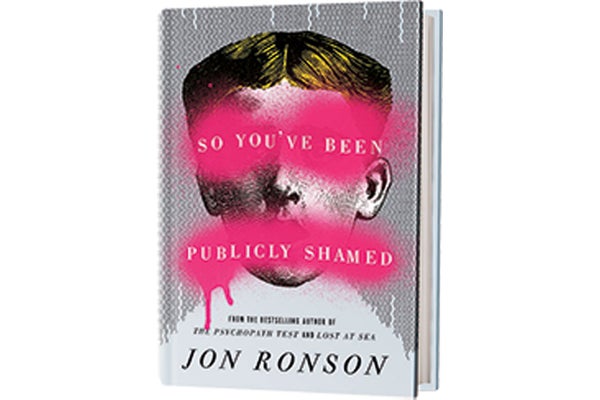
So You've Been Publicly Shamed
by Jon Ronson
Riverhead, 2015 ($27.95)
Social media has brought about “a great renaissance of public shaming,” writes journalist Ronson, who tells of people whose mistakes have invited mass scorn. He interviews a woman, Justine Sacco, whose ill-considered joke about AIDS and Africa on Twitter temporarily made her the Internet's Public Enemy No. 1, as well as journalist Jonah Lehrer, who fabricated quotes and plagiarized himself—and was broadly lambasted when the truth was revealed.
Twitter, Facebook and their ilk allow a kind of “democratization of justice” with far-reaching consequences for its targets, Ronson writes. He probes why we seem to love heaping contempt on strangers and what happens to the shamed when the Internet's collective notice has moved on. In Sacco's case, for instance, she lost her job, traveled to Ethiopia for a time and is still trying to get back on her feet. The resulting book adds up to an intriguing look into the psychology of public shaming and the technology that enables it.
Subscribe to Support Independent Journalism
Great science journalism requires human expertise, time, effort and creativity. And it costs money. That’s why I and the journalists here at Scientific American hope you’ll join our community.
When you subscribe, you are supporting staff and freelance journalists who are passionate about telling science stories that are true, important and compelling. Our editors and reporters are often experts in their fields, which means they understand the nuances of big discoveries and can untangle the breakthroughs from the hype. With a subscription, you are also supporting rigorous fact-checking to ensure the words we publish are precise and accurate. And you’re supporting original illustrations, graphics and photos that bring you closer to an advanced laboratory, an ice sheet in Antarctica or a space mission in orbit. You’re helping us craft other types of high-quality journalism as well: Our newsletters are carefully written, edited and curated by staffers you have or will come to know and love. Our Science Quickly podcast is based on original reporting, collaboration with editors and scientists and exacting production.
Subscriptions keep this engine running so we can continue to deliver thoughtful, rigorous and independent science journalism to you. In an era of viral misinformation, this work is crucial. If you value what we do, I hope you’ll consider joining us as a subscriber