On supporting science journalism
If you're enjoying this article, consider supporting our award-winning journalism by subscribing. By purchasing a subscription you are helping to ensure the future of impactful stories about the discoveries and ideas shaping our world today.
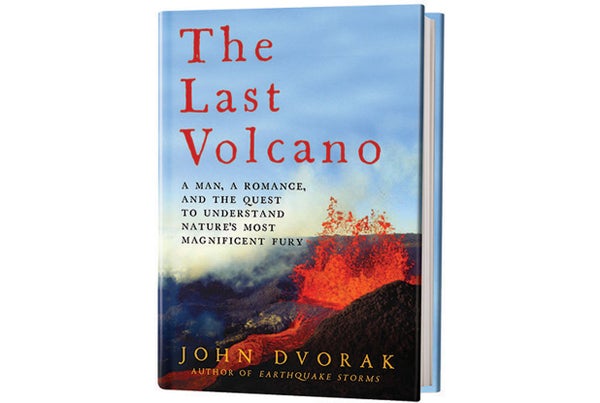
The Last Volcano: A Man, A Romance, and the Quest to Understand Nature’s Most Magnificent Fury
by John Dvorak
Pegasus Books, 2015 (($28.95))
In the spring of 1902 a young geologist named Thomas Jaggar arrived in Martinique to observe a scene of desolation—piles of rubble, heaps of volcanic ash and charred bodies everywhere—in the wake of an eruption from Mount Pelée. The trip changed the course of Jaggar's life, spurring him to dedicate his career to the study of volcanoes and how to protect people from them. Volcano expert Dvorak chronicles Jaggar's quest, following him from his comfortable position at Harvard University to the relative wilds of the island of Hawaii, where he founded a small station on the rim of the Kilauea volcano to monitor an active lava lake. There he met a widowed schoolteacher who became his wife and eventually his partner in volcanology. The two shared a reverence for volcanoes as well as a horror at the destruction they cause, and their story is an inspiring tale of devotion, both to science and to each other.
Subscribe to Support Independent Journalism
Great science journalism requires human expertise, time, effort and creativity. And it costs money. That’s why I and the journalists here at Scientific American hope you’ll join our community.
When you subscribe, you are supporting staff and freelance journalists who are passionate about telling science stories that are true, important and compelling. Our editors and reporters are often experts in their fields, which means they understand the nuances of big discoveries and can untangle the breakthroughs from the hype. With a subscription, you are also supporting rigorous fact-checking to ensure the words we publish are precise and accurate. And you’re supporting original illustrations, graphics and photos that bring you closer to an advanced laboratory, an ice sheet in Antarctica or a space mission in orbit. You’re helping us craft other types of high-quality journalism as well: Our newsletters are carefully written, edited and curated by staffers you have or will come to know and love. Our Science Quickly podcast is based on original reporting, collaboration with editors and scientists and exacting production.
Subscriptions keep this engine running so we can continue to deliver thoughtful, rigorous and independent science journalism to you. In an era of viral misinformation, this work is crucial. If you value what we do, I hope you’ll consider joining us as a subscriber