Book Review: The Man Who Wasn't There

Recommendations from Scientific American

Join Our Community of Science Lovers!


On supporting science journalism

If you're enjoying this article, consider supporting our award-winning journalism by subscribing. By purchasing a subscription you are helping to ensure the future of impactful stories about the discoveries and ideas shaping our world today.


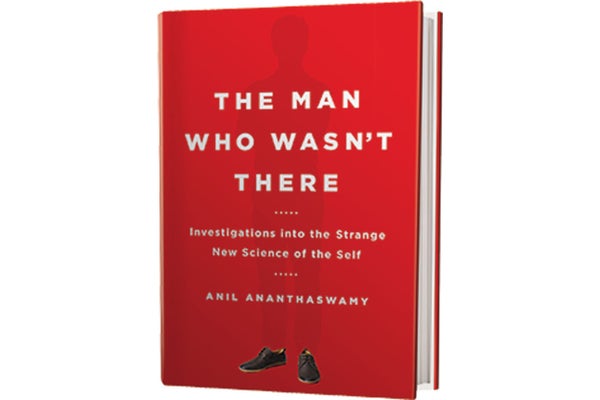
The Man Who Wasn’t There: Investigations into the Strange New Science of the Self
by Anil Ananthaswamy
Dutton, 2015 (($26.95))

“From the Buddha to the modern neuroscientist and philosopher, humans have pondered the nature of the self,” writes science journalist Ananthaswamy, but the “self” remains largely shrouded in mystery. Here he probes selfhood by exploring neurological conditions that rob people of something we often consider integral to human identity—from body integrity identity disorder (which makes people feel that a part of their body is not their own) to Alzheimer's disease. In each chapter, Ananthaswamy details the neuroscience of the disorder and uses personal stories to illustrate the ailment's often heartrending effects. By framing each condition as a perturbation in a person's sense of self, Ananthaswamy demonstrates how intimately brain functions are linked to identity.

About Maria Temming

Maria is very excited to be working as a AAAS Mass Media Fellow for Scientific American this summer. She's a double major in physics and creative writing, and hopes to pursue a Master's degree in science writing after graduation.

More by Maria Temming
Scientific American Magazine Vol 313 Issue 4This article was published with the title “The Man Who Wasn't There” in Scientific American Magazine Vol. 313 No. 4 (), p. 80
doi:10.1038/scientificamerican1015-80b

It’s Time to Stand Up for Science

If you enjoyed this article, I’d like to ask for your support. Scientific American has served as an advocate for science and industry for 180 years, and right now may be the most critical moment in that two-century history.

I’ve been a Scientific American subscriber since I was 12 years old, and it helped shape the way I look at the world. SciAm always educates and delights me, and inspires a sense of awe for our vast, beautiful universe. I hope it does that for you, too.

If you subscribe to Scientific American, you help ensure that our coverage is centered on meaningful research and discovery; that we have the resources to report on the decisions that threaten labs across the U.S.; and that we support both budding and working scientists at a time when the value of science itself too often goes unrecognized.

In return, you get essential news, captivating podcasts, brilliant infographics, can't-miss newsletters, must-watch videos, challenging games, and the science world's best writing and reporting. You can even gift someone a subscription.

There has never been a more important time for us to stand up and show why science matters. I hope you’ll support us in that mission.

Thank you,

David M. Ewalt, Editor in Chief, Scientific American

Subscribe