
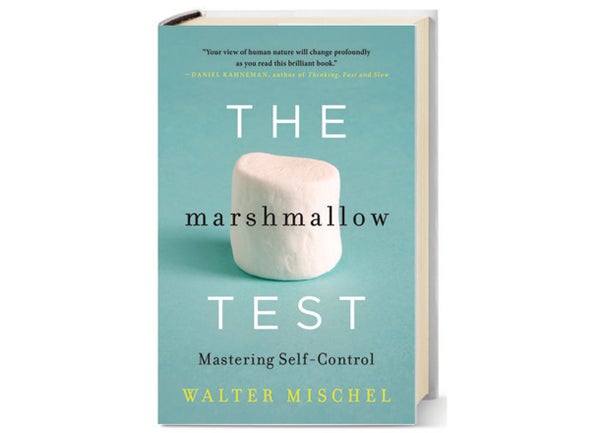
The Marshmallow Test: Mastering Self-Control
by Walter Mischel
Little, Brown, 2014 ($29)
Fifty years ago Mischel, a psychologist, presented preschoolers with a difficult choice. The youngsters could opt for immediate enjoyment of a single delectable treat—a marshmallow—or they could wait up to 20 minutes and get two of them. Over time Mischel found that kids who could hold out for greater rewards had better social and cognitive development, self-worth and SAT scores later in life.
These curious correlations are at the heart of The Marshmallow Test, which surveys dozens of studies that document the power of self-control. Along the way, Mischel reveals the techniques that separate highly disciplined kids from their peers, tricks that anyone can use to sidestep the snares of temptation.
On supporting science journalism
If you're enjoying this article, consider supporting our award-winning journalism by subscribing. By purchasing a subscription you are helping to ensure the future of impactful stories about the discoveries and ideas shaping our world today.
The choice between instant or delayed rewards pits two factions within the brain against each other. One side, the “hot” limbic system, which includes the emotionally reactive amygdala, focuses on the mouthwatering marshmallow and urges us to enjoy it now. The other side, the “cool” prefrontal cortex, which oversees planning and problem solving, reasons that greater pleasure is worth the wait.
Each child will respond differently to this mental tug-of-war, and factors such as genetics, parenting and environment can shape the reaction. For example, kids raised in unstable homes with unreliable adults are more apt to take their rewards right away. Experience has taught them to distrust the promise of future treats. Stress can also tip the balance toward hot thinking, which can explain why otherwise even-tempered adults will still succumb to inappropriate enticements when under duress.
Fortunately, anyone can learn to delay gratification. Mischel's observations have revealed that people can study their lapses in self-control and develop personal coping strategies. Distraction, for example, can shift focus away from the siren call of a sweet snack or the lure of a cigarette. Cognitive reappraisal—in which we reinterpret our emotional response to something—can help us think of our greatest temptation as a toxin rather than a treat. And imagining how our future self would assess our decisions can keep shortsighted desires in check.
The Marshmallow Test is a wonderfully rich treat in itself, laden with advice and detailed research. Mischel presents all his conclusions with nuance, reminding readers of the wide variation in human behavior. He also acknowledges that the occasional lapse in self-control could be good. A life spent working and waiting can be just as deleterious as one spent giving in to every reward or vice. Still, in most cases, the science of self-control is clear: good things really do come to those who wait.