
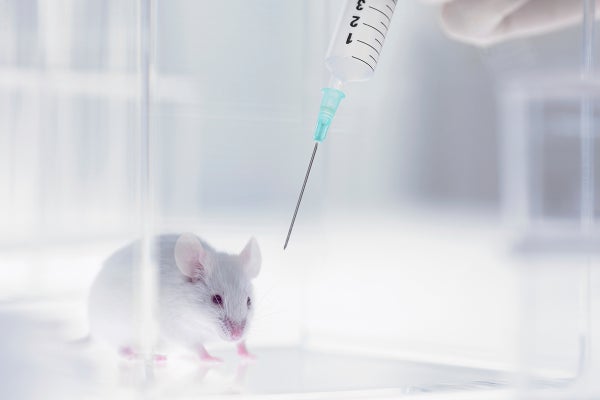
Stem cells in the brain could be the key to extending life and slowing aging. These cells—which are located in the hypothalamus, a region that produces hormones and other signaling molecules—can reinvigorate declining brain function and muscle strength in middle-aged mice, according to a study published in August in Nature.
Previous studies have suggested that the hypothalamus is involved in aging, but the latest research shows that stem cells in this region can slow the process. That makes sense because the hypothalamus is involved in many bodily functions, including inflammation and appetite, says Dongsheng Cai, a neuroendocrinologist at the Albert Einstein College of Medicine and a co-author of the study.
In their study, Cai and his colleagues found that stem cells in the hypothalamus disappear as mice grow older. When the researchers injected their mice with viruses that destroy these cells, the animals seemed to grow older faster, experiencing declines in memory, muscle strength, endurance and coordination. They also died sooner than untreated mice of the same age.
On supporting science journalism
If you're enjoying this article, consider supporting our award-winning journalism by subscribing. By purchasing a subscription you are helping to ensure the future of impactful stories about the discoveries and ideas shaping our world today.
Next, the team injected stem cells taken from the hypothalami of newborn mice into the brains of middle-aged mice. After four months, these animals had better cognitive and muscular function than untreated mice of the same age. They also lived about 10 percent longer, on average.
The researchers found that these stem cells release molecules called microRNAs, which help to regulate gene expression, into the cerebrospinal fluid. When the team injected these microRNAs into the brains of middle-aged mice, they found that the molecules slowed cognitive decline and muscle degeneration.
Forever Young
It is an interesting paper, says Leonard Guarente, a molecular biologist at the Massachusetts Institute of Technology, who studies aging and was not involved in the work. He adds that it could lead to various ways of developing antiaging therapies in people.
Stem cell therapies might enhance the ability of the hypothalamus to act as a master regulator, given that the latest results suggest it controls aging through signaling peptides such as hormones and microRNAs, Cai says. He adds that his team is trying to identify which of the thousands of types of microRNA produced are involved in aging and hopes to investigate whether similar mechanisms exist in nonhuman primates.
The findings represent a breakthrough in aging research, says Shin-ichiro Imai, who studies aging at Washington University in St. Louis and was not involved in the study. The next steps would be to link these stem cells with other physiological mechanisms of aging, he notes. For instance, these cells may have a role in regulating the neurons that release a hormone called gonadotropin-releasing hormone (GnRH), which is secreted by the hypothalamus and is associated with aging. Imai would also like to know whether the microRNAs from the cells can pass into the bloodstream, which would carry them throughout the body.
Cai suspects that antiaging therapies targeting the hypothalamus would need to be administered in middle age, before a person’s muscles and metabolism have degenerated beyond a point that could be reversed.
It is unclear by how much such a therapy could extend a human life span, but Guarente says that slowing the effects of aging is the more important goal. “Living longer isn’t important if you’re not healthy,” he says.