
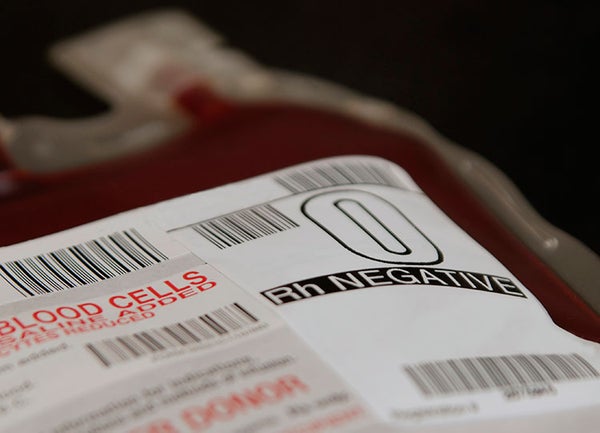
Brazilian health authorities confirmed on Thursday a case of transmission of Zika through a transfusion of blood from a donor who had been infected with the mosquito-borne virus that is spreading rapidly through the Americas.
The health department of Campinas, an industrial city near Sao Paulo, said a man with gunshot wounds became infected with Zika after multiple blood transfusions in April 2015. Officials said they determined that one of the people whose donated blood was used in the transfusion had been infected with Zika.
Zika is usually contracted via mosquito bites, so transmission of the illness through blood transfusions adds another concern to efforts to contain the outbreak. Some countries have tightened procedures for blood donations, to protect blood supplies.
On supporting science journalism
If you're enjoying this article, consider supporting our award-winning journalism by subscribing. By purchasing a subscription you are helping to ensure the future of impactful stories about the discoveries and ideas shaping our world today.
Zika has been reported in 30 countries since it first appeared in the Americas last year in Brazil, where it has been linked to thousands of babies being born with microcephaly. This is a condition where infants have abnormally small heads and often have underdeveloped brains.
Campinas health officials said the donor of the contaminated blood developed symptoms afterwards that were mistaken for dengue, a virus borne by the same mosquito that transmits Zika. A blood test that showed he had Zika was not completed until Jan. 28 this year.
The blood center at the University of Campinas said a second person who donated blood in May developed symptoms and tested positive for Zika, though the recipient of the contaminated blood has not developed symptoms of the virus.
Brazil's Health Ministry said the first recipient died of his wounds and not from the Zika infection. It said it was reinforcing instructions to blood banks that people infected with Zika or dengue not be permitted to donate blood for 30 days after full recovery from the active stage of Zika infection.
On Tuesday, the American Red Cross urged prospective donors who have visited Zika outbreak zones to wait at least 28 days before giving blood, but said the risk of transmitting the virus through blood donations was "extremely" low in the continental United States. The agency asked donors who give blood and subsequently develop symptoms consistent with Zika within 14 days to notify the Red Cross so the product can be quarantined.
Also causing concern is the possibility of transmission through sexual contact. Health officials in Texas reported on Tuesday that a person in Dallas became infected after having sex with another person who had traveled in Venezuela, where the virus is circulating.
(Reporting by Anthony Boadle; Editing by Daniel Flynn, Will Dunham and Frances Kerry)