
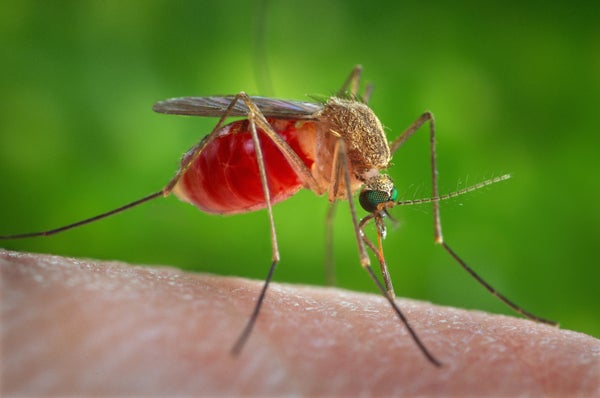
RIO DE JANEIRO, July 21 (Reuters) - Brazilian researchers on Thursday said they found signs of the Zika virus in a common mosquito that is a separate species from the insect known to be the primary means of transmission.
They warned, however, that further tests are needed to determine whether the species, known as Culex quinquefasciatus, is in fact responsible for transmitting the virus to humans and, if so, to what extent.
The scientists, from a leading Brazilian research institute known as the Oswaldo Cruz Foundation, discovered the Zika traces in Culex mosquitoes captured in and around the northeastern Brazilian city of Recife, capital of the state that was hit hardest by the Zika outbreak since last year.
On supporting science journalism
If you're enjoying this article, consider supporting our award-winning journalism by subscribing. By purchasing a subscription you are helping to ensure the future of impactful stories about the discoveries and ideas shaping our world today.
In March, the same researchers said they had successfully transmitted the Zika virus to Culex mosquitoes in the lab, but were not yet sure at the time whether the species could carry the virus naturally.
The Zika traces, the scientists said in a statement, were found using methods that identify ribonucleic acid from the virus. The findings, they said, "confirm the species as a potential vector of the virus."
Still, many questions remain to determine whether Culex, even if capable of carrying Zika, would be a significant source of infection in humans.
Culex mosquitos are more common than Aedes aegypti, the species primarily responsible for transmitting the Zika virus, and are able to withstand more temperate climates. They are common across the Americas and in tropical and subtropical climates elsewhere.
Aedes aegypti has different breeding, feeding and overall habits that scientists say make it an efficient vector for the disease in humans.
Compared with that mosquito, which is fond of urban and household environments and likes to feed on humans, Culex likes to live around trees and other high areas and is as likely to feed on birds and other animals as it is on humans.
"Just finding the virus in another species doesn't mean that it can efficiently transmit it," says Jerome Goddard, an entomologist and specialist in mosquito-borne illnesses at Mississippi State University.
Because mosquitoes of various species are capable of carrying any number of infections or parasites, scientists say that eradication efforts for any illness must concentrate on the insects known to best transmit each particular disease. (Reporting by Paulo Prada; Editing by Bernard Orr)