
Bugged: The Insects Who Rule the World and the People Obsessed with Them
by David MacNeal.
St. Martin's Press, 2017 ($25.99)
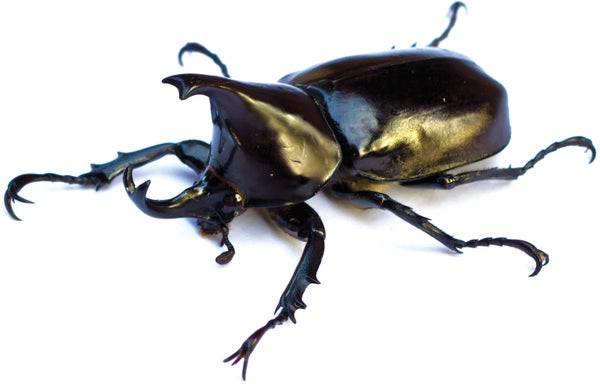
During the steamy summer months many people dream of a world without mosquitoes, ants and other pesky bugs. But remove all the insects, which comprise about 75 percent of species in the animal kingdom, and the world as we know it could not exist. Insects bind together nearly every ecosystem by pollinating 80 percent of food plants and recycling dead organic matter. Science writer MacNeal travels the globe documenting the science and culture of all things “bug.” There is the painstaking work of taxonomists who continue to catalogue the earth's estimated 10 quintillion insects; the Greek island beekeepers; and the Zika-fighting mosquitoes in Brazil. The world is surprisingly full of insect lovers, one of whom tells MacNeal that “bugs are more interesting than people.” Interesting or not, insects provide “beneficial, multibillion-dollar services keeping life on this planet humming along.”
Why?: What Makes Us Curious
by Mario Livio.
Simon & Schuster, 2017 ($26)
On supporting science journalism
If you're enjoying this article, consider supporting our award-winning journalism by subscribing. By purchasing a subscription you are helping to ensure the future of impactful stories about the discoveries and ideas shaping our world today.
We humans are different from other animals in our ability to wrap our mind around abstract ideas, imagine scenarios and formulate questions. Arguably, we are the most voraciously curious creatures on the planet, and the drive to discover, a crucial part of our survival on earth, has led not only to the many fields of science but to religion and philosophy as well. Renowned astrophysicist Livio takes a fascinating walk through the science of curiosity (a good deal of experimental evidence shows that an individual's level of curiosity is heritable) and profiles some of the most inquiring human minds to have lived. Leonardo da Vinci and Richard Feynman are examples of exceptional inquisitiveness, with their wide and varied interests and hunger to uncover answers for themselves rather than relying on previous proofs and demonstrations.
Into the Gray Zone: A Neuroscientist Explores the Border between Life and Death
by Adrian Owen.
Scribner, 2017 ($28)
What if a victim of brain trauma who is supposedly in a vegetative state is actually fully awake but unable to even blink an eye to communicate? During the past 20 years advances in neuroscience have shown that this sometimes happens. Neuroscientist Owen explains how his team began using PET and functional MRI scans in the late 1990s to detect brain activity in vegetative patients. Their brains responded like those of conscious people to photographs of loved ones and recordings of recognizable yet neutral words such as “candle,” “lemon” and “sofa.” Some patients survive “the gray zone,” come out of their vegetative state and live to tell about it. But many do not, including some of Owen's own loved ones, who, he says, drove him beyond pursuing science for science's sake. —Andrea Marks
The Ends of the World: Volcanic Apocalypses, Lethal Oceans, and Our Quest to Understand Earth's Past Mass Extinctions
by Peter Brannen.
HarperCollins, 2017 ($27.99)
Five times in the earth's history a mass extinction has almost entirely extinguished all animal life. Science journalist Brannen explores the unique story of each of these tumultuous endings by tagging along with fossil hunters and geologists, from the volcanic outcroppings of Palisades, N.Y., to the center of the 110-mile-wide crater in Yucatán, Mexico. Each extinction was in some way associated with drastic changes in the planet's atmospheric CO2 levels. Portentous, considering that the current concentration of CO2, now more than 400 parts per million, is reaching a level not seen for perhaps three million years, since the Pliocene epoch. As Brannen demonstrates again and again, “life on earth is resilient, but not infinitely so.”
