
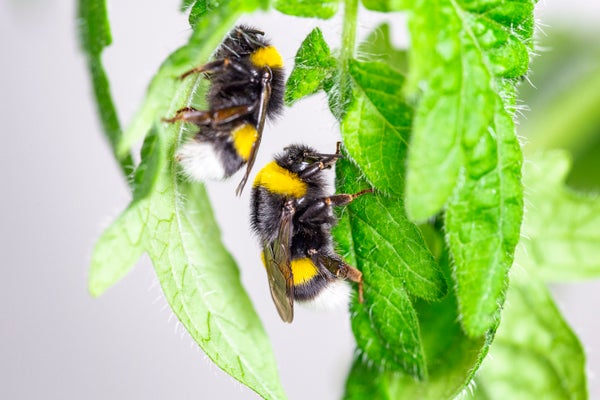
Bumblebees are a resourceful bunch: when pollen is scarce and plants near the nest are not yet flowering, workers have developed a way to force them to bloom. Research published on Thursday in Science shows that the insects puncture the plants’ leaves, which causes them to flower, on average, 30 days earlier than they otherwise would. How the technique evolved and why the plants respond to bumblebee bites by blooming remain unclear. But researchers say the discovery of a new behavior in such a familiar creature is remarkable.
“This is one of those really rare studies that observes a natural phenomenon that hadn’t been documented before,” says John Mola, an ecologist at the U.S. Geological Survey’s Fort Collins Science Center in Colorado, who was not involved in the study. The new finding “offers all sorts of questions and potential explanations” about how widespread the behavior is and why it occurs, he says.
Study co-author Consuelo De Moraes, a chemical ecologist at the Swiss Federal Institute of Technology Zurich (ETH Zurich), says she and her colleagues were observing one species of bumblebee in an unrelated laboratory experiment when they noticed the insects were damaging plant leaves and wondered why. “Initially we wanted to see if they were removing the tissue or feeding on the plants or taking [leaf material] to the nest,” she says. And because previous research had shown stress could induce plants to flower, De Moraes and her colleagues also wondered whether the bees might be creating blooms on demand.
On supporting science journalism
If you're enjoying this article, consider supporting our award-winning journalism by subscribing. By purchasing a subscription you are helping to ensure the future of impactful stories about the discoveries and ideas shaping our world today.
To find out, the team placed pollen-deprived bumblebees together with tomato and mustard plants in mesh cages. The bees soon cut several holes in the leaves of each plant using their mandibles and proboscises. As a test, the researchers tried to replicate the bumblebee damage in additional plants with forceps and a razor. Both sets of plants with injured leaves bloomed faster, but the ones punctured by the bees flowered weeks earlier than those cut by the scientists, suggesting that chemicals in the insects’ saliva may be involved as well.
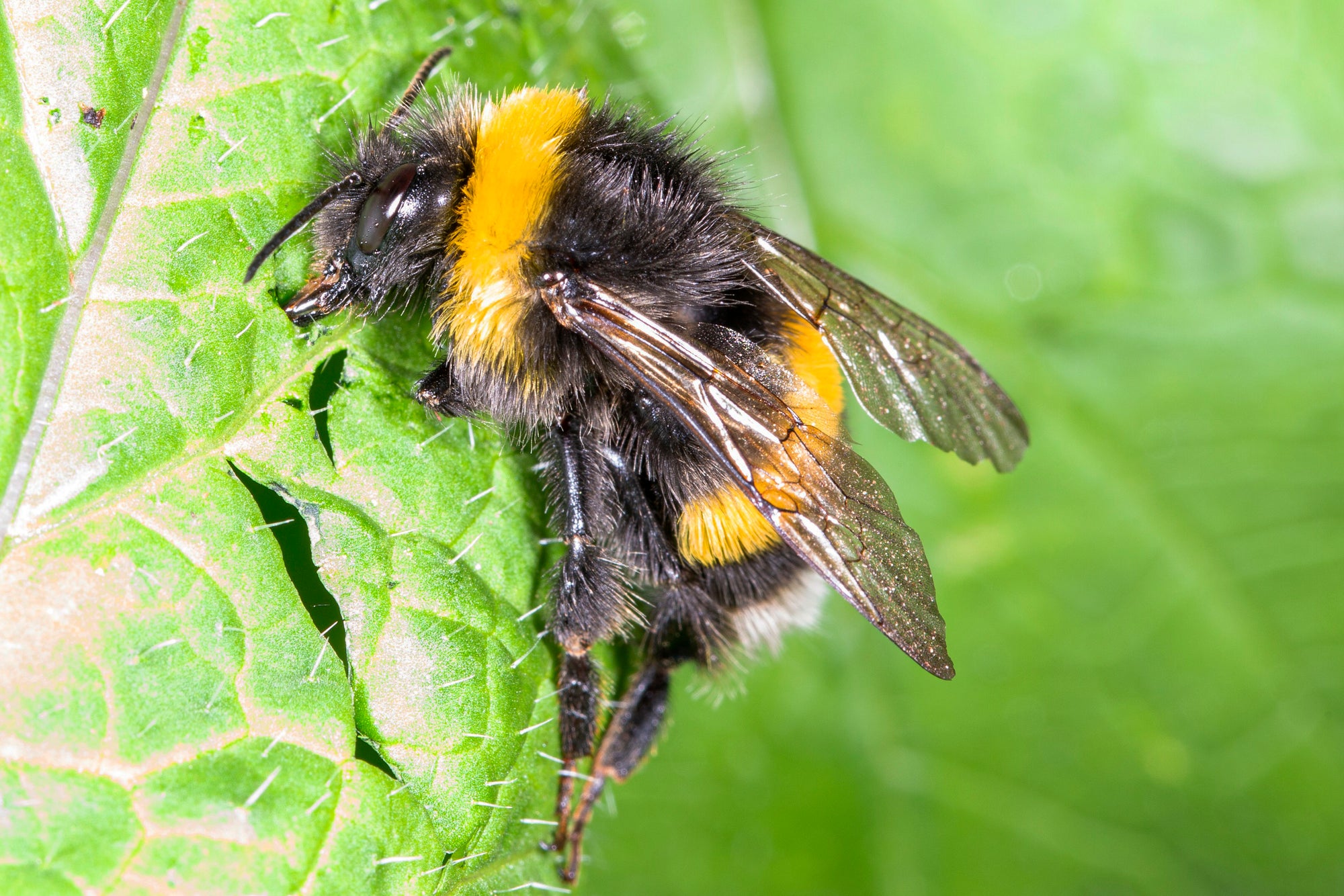
A bumblebee (Bombus terrestris) worker damaging a plant leaf. Credit: Hannier Pulido, De Moraes and Mescher Laboratories
Next, the researchers moved out of the laboratory to see whether bumblebees would continue to damage nonflowering plants near their nest even if blooming plants were available farther away. They did so. “If they’re having to forage farther afield to find flowers, it might still make sense to do this damaging behavior near the nest if that helps bring the local resources online earlier,” says study co-author Mark Mescher, also a chemical ecologist at ETH Zurich.
The findings suggest the bees’ behavior is an adaptation that maximizes pollen-foraging efficiency, but they do not definitively confirm that hypothesis, Mescher says. Neal Williams, an entomologist at the University of California, Davis, who was not involved in the study, says the possibility is compelling and warrants more research. “In order for something to be really defined and clearly understood as adaptive, we would want to be able to say the behavior was evolving because it contributed some relative fitness benefit to the colony,” he says. In bees and other eusocial organisms, a single queen produces offspring, and workers are sterile, so natural selection operates on the entire nest. The worker bees that damage the plant leaves do not even live long enough to see the benefits of early flowering—but because their behavior makes more pollen available to the nest as a whole, it could be the result of evolutionary pressures.
In the future, scientists could investigate how the behavior may have evolved and how widespread it is among other wild bumblebee species, as well as what is happening in plants on the molecular level after a bee bite. Understanding those questions could help better predict bumblebees’ ability to thrive in the future, as climate change threatens to upend the delicate synchrony of pollinator-plant relationships by changing the timing of flowering and insect hibernation and migrations. “With climate change, fundamentally, the environment becomes less predictable,” Mescher says. “But what we found might tend to mitigate disruptions due to climate change.”
