
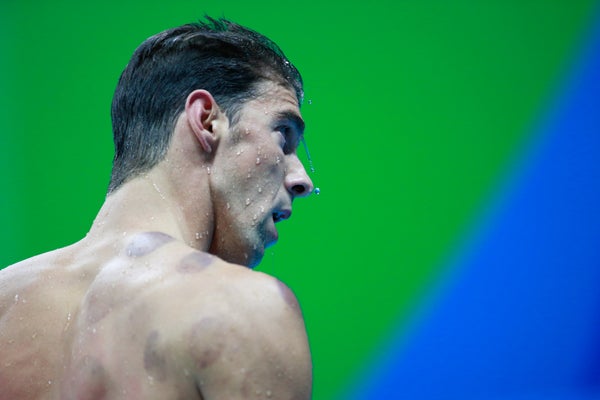
Michael Phelps is red, white, and black and blue all over this Olympics thanks to a scientifically questionable technique known as cupping.
Phelps and other athletes are turning to cupping therapy in hopes of healing their sore muscles. It’s a procedure based in ancient medicine in which cups are placed on top of the skin. The cups create a vacuum, pulling up the skin in an effort to stimulate blood flow to the area. It leaves behind the hallmark round bruises, often deep red or purple, that several swimmers and gymnasts are sporting in Rio.
So, does it work?
On supporting science journalism
If you're enjoying this article, consider supporting our award-winning journalism by subscribing. By purchasing a subscription you are helping to ensure the future of impactful stories about the discoveries and ideas shaping our world today.
Scientifically speaking, the jury’s still out.
A single-blind study published in March tested how well cupping therapy worked to treat self-reported neck and shoulder pain. Half the 60 patients received cupping therapy, while the other half got no treatment at all. Patients who underwent cupping did report a significant improvement in pain compared to those who didn’t.
But that could have been the placebo effect: After all, they knew they were getting a treatment, while the control group knew nothing was being done to try to ease their aches.
Another study testing cupping as a treatment for 40 patients with knee arthritis turned up comparable results.
There are a smattering of similar, small studies that show cupping might help relieve pain and muscle fatigue, but those studies also don’t account for the potential of a placebo effect.
Then again, the placebo effect is powerful; simply believing that you’re getting effective treatment can help you feel better—and perhaps perform better.
And, anecdotally, athletes like Phelps say the procedure helps keep them at the top of their game.
The current hype over cupping actually started in Hollywood, with none other than Gwyneth Paltrow, who sported a backless dress at a red carpet event in 2004 that revealed cup marks dotted down her back. Cupping has since caught on both in the celebrity sphere and in sports medicine, with everyone from Jennifer Aniston to tennis great Andy Murray endorsing the practice.
Republished with permission from STAT. This article originally appeared on August 8, 2016