
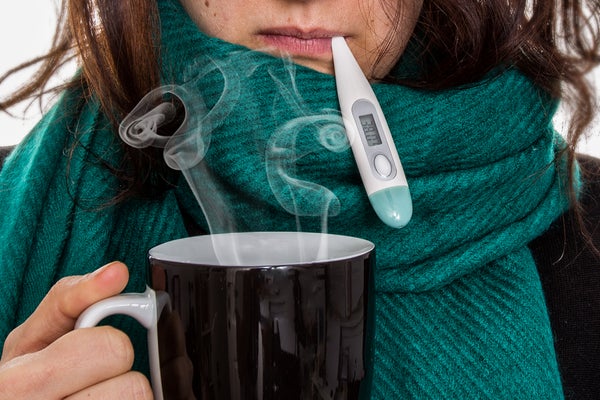
This flu season is a particularly severe one, and it's not over yet—health officials say flu activity will likely remain elevated for at least several more weeks. But if you already caught the flu, are you in the clear for the rest of the season?
Unfortunately, no. Experts say it is possible to catch the flu twice in one season. That's because there are multiple strains of flu viruses circulating at any one time, said Dr. William Schaffner, an infectious-disease specialist at Vanderbilt University Medical Center in Nashville. So getting sick with one strain of flu won't necessarily protect you from a different strain.
But the good news is that it's pretty rare to catch the flu twice in a single season. Having this happen would be "quite a stroke of bad luck," Schaffner told Live Science. [6 Flu Vaccine Myths]
On supporting science journalism
If you're enjoying this article, consider supporting our award-winning journalism by subscribing. By purchasing a subscription you are helping to ensure the future of impactful stories about the discoveries and ideas shaping our world today.
Most people who get the flu this season are getting sick with the H3N2 strain. But a smaller portion of people (around 10 to 15 percent) are getting the H1N1 strain or the influenza B virus, according to data from the Centers for Disease Control and Prevention. (H3N2 and H1N1 are both strains of influenza A.)
Seasonal flu shots contain three to four strains of flu virus, because there isn't much "cross protection" between strains, Schaffner said. It's possible that getting sick with one type of influenza A virus would offer some modest protection against another type of influenza A, but it probably wouldn't give you any protection against the influenza B virus, Schaffner said.
If you do catch the flu, and you haven't received the flu vaccine for the season, doctors generally recommend that you still get a flu shot after you're no longer sick, particularly if it's early on in the flu season, Schaffner said. The CDC recommends the flu vaccine for everyone ages 6 months and older.
This flu season is turning out to be one of the worse since the 2009 "swine flu" epidemic, CDC officials said last week. Health officials are seeing "widespread' flu activity across the entire country.
For the past five flu seasons, health officials found that flu activity was elevated for around 16 weeks. So far this season, flu activity has been elevated for nine weeks, meaning that the flu season may be only about halfway over, the CDC said.
Editor's Recommendations
Copyright 2017 LiveScience.com, a Purch company. All rights reserved. This material may not be published, broadcast, rewritten or redistributed.