
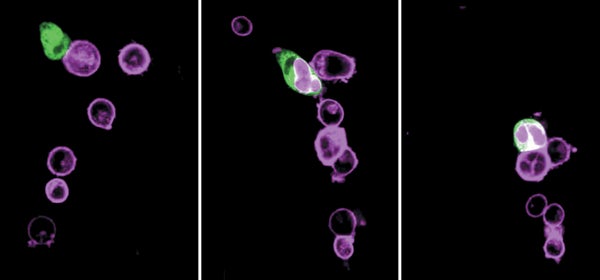
In living organisms, some cells ruthlessly gobble up others. This “cellular cannibalism” is a common natural process: within your own body, white blood cells are consuming millions of old red blood cells this second. New research published in the Proceedings of the National Academy of Sciences USA suggests that using a group of genes to stimulate such cannibalistic behavior could improve a novel cancer immunotherapy.
The idea started when biologist Denise J. Montell, senior author of the new paper, and her colleagues noticed that hyperactivated forms of genes in the Rac family, which help cells envelop things they’re attempting to ingest, were causing tissue death in fruit fly embryos. It turned out that the modified genes make cells consume their neighbors in “a feeding frenzy,” Montell says. Humans have their own versions of these genes, called RAC, and Montell wondered whether they might help her new colleague Meghan Morrissey at the University of California, Santa Barbara, with her work on the cancer immunotherapy CAR-M.
CAR-M, which is currently in early-stage human trials, focuses on macrophages: white blood cells that naturally engulf harmful substances but are typically useless against cancers. CAR-M involves collecting a patient’s macrophages (M) and genetically engineering them to add proteins called chimeric antigen receptors (CAR), which let the macrophages recognize cancer cells. The macrophages are then put back into the patient, where the engineered cells should hunt down and consume cancers. A related immunotherapy already in use is most effective for blood cancers; researchers hope CAR-M will be able to target solid tumors, such as breast or lung cancers. Morrissey’s research was promising, but she’d observed that many macrophages were only “nibbling” at cancer cells. Montell suspected they could use RAC to give the cells a heartier appetite.
On supporting science journalism
If you're enjoying this article, consider supporting our award-winning journalism by subscribing. By purchasing a subscription you are helping to ensure the future of impactful stories about the discoveries and ideas shaping our world today.
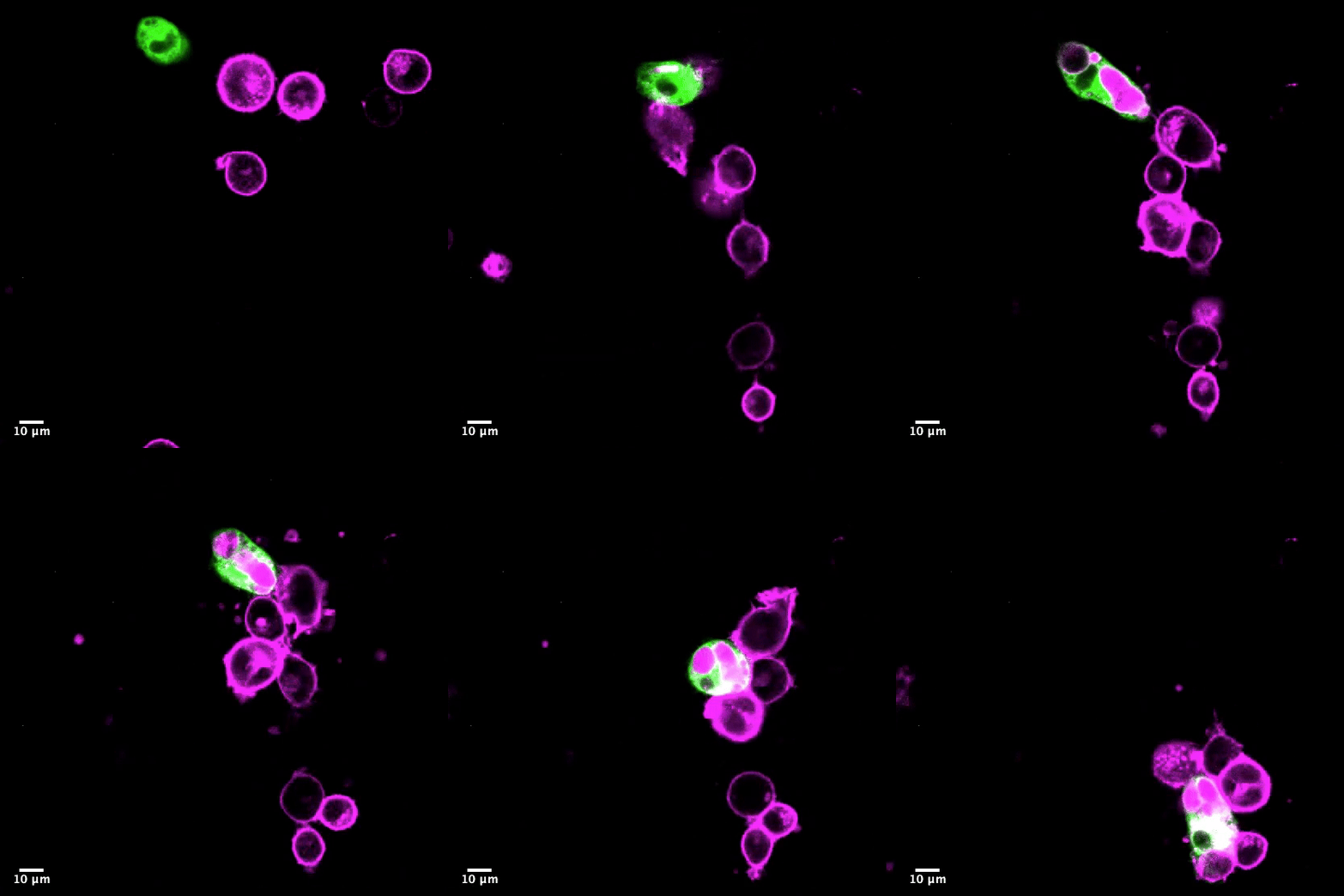
Credit: From “Hyperactive Rac Stimulates Cannibalism of Living Target Cells and Enhances CAR-M-Mediated Cancer Cell Killing,” by Abhinava K. Mishra et al., in Cell Biology; December, 2023.
In the new study, Montell, Morrissey and their colleagues found that—at least in the laboratory—hyperactivating RAC genes in macrophages did indeed make them ravenous for human cancer cells. The team is now discussing collaborations with biotech companies to test these findings in larger tissues and in mice with tumors. Montell is hopeful that if those experiments work, testing could “move from mice to people relatively quickly.”
“This is certainly a really exciting translation between an observation of basic biology and applying it to how you could engineer a mammalian immune cell,” says Nathan Singh, an oncologist at Washington University School of Medicine in St. Louis, who specializes in CAR immunotherapy research. One crucial part of animal trials will be making sure the macrophages consume only tumors, he adds: “Showing that it does this in a tissue-specific way will, of course, be critical.”
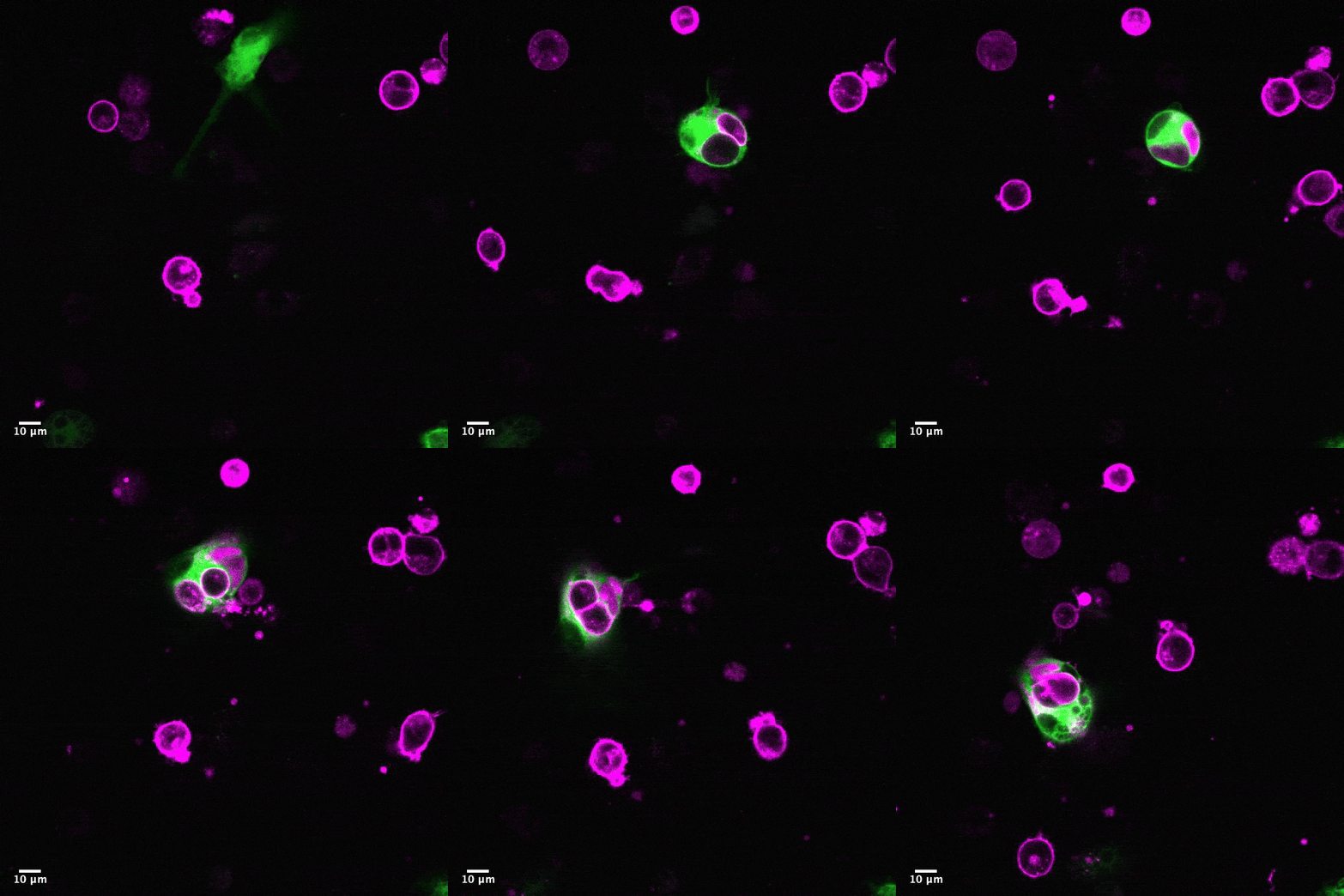
Credit: From “Hyperactive Rac Stimulates Cannibalism of Living Target Cells and Enhances CAR-M-Mediated Cancer Cell Killing,” by Abhinava K. Mishra et al., in Cell Biology; December, 2023.