
With this week’s bellicose boasting about who has the bigger red button on his desk, an alert Thursday from the Centers for Disease Control and Prevention felt more than a bit on the nose.
With the prospect of actual nuclear war breaking out between North Korea and the United States seeming ever more real, the CDC is moving to prepare health professionals and others on what the public health response would be to a nuclear detonation.
The CDC announced it is staging a grand rounds—a teaching session — on the topic. The target audience: doctors, nurses, epidemiologists, pharmacists, veterinarians, certified health education specialists, laboratory scientists, and others. The event will be held Jan. 16.
On supporting science journalism
If you're enjoying this article, consider supporting our award-winning journalism by subscribing. By purchasing a subscription you are helping to ensure the future of impactful stories about the discoveries and ideas shaping our world today.
A spokesperson for the agency said planning for the event has been underway for months—in fact, since CDC officials took part in a “radiation/nuclear incident exercise” led by the Federal Emergency Management Agency last April, Kathy Harben said in an email.
“CDC participants felt it would be a good way to discuss public health preparedness and share resources with states and other partners. State and local partners also have expressed interest in this topic over time,” she said.
Still, the timing of the announcement was eerie, coming on the heels of back-to-back threats exchanged between North Korean leader Kim Jong Un and President Donald Trump.
“Join us for this session of Grand Rounds to learn what public health programs have done on a federal, state, and local level to prepare for a nuclear detonation,” urges the CDC email advising people on one of the agency’s mailing lists about the session. “Learn how planning and preparation efforts for a nuclear detonation are similar and different from other emergency response planning efforts.”
The CDC holds grand rounds virtually monthly on topics such as birth defects prevention, diseases spread by ticks, and sodium reduction. A previous grand rounds on radiological and nuclear disaster preparedness was offered in March 2010.
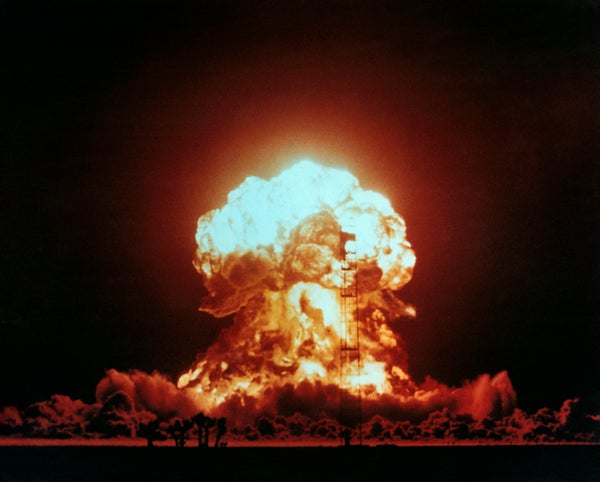
The titles of several of the talks that will make up the session are enough to give one pause, including “Preparing for the Unthinkable,” and “Roadmap to Radiation Preparedness.” Equally unsettling is the image of a nuclear mushroom cloud on the webpage advertising the event.
“While a nuclear detonation is unlikely, it would have devastating results and there would be a limited time to take critical protection steps,” the agency said. “Despite the fear surrounding such an event, planning and preparation can lessen deaths and illness.”
“For instance, most people don’t realize that sheltering in place for at least 24 hours is crucial to saving lives and reducing exposure to radiation. While federal, state and local agencies will lead the immediate response efforts, public health will play a key role in responding.”
The event will be webcast live from the CDC headquarters in Atlanta, and the will be posted on the grand rounds archive page a few days later that week.
Republished with permission from STAT. This article originally appeared on January 4, 2017