
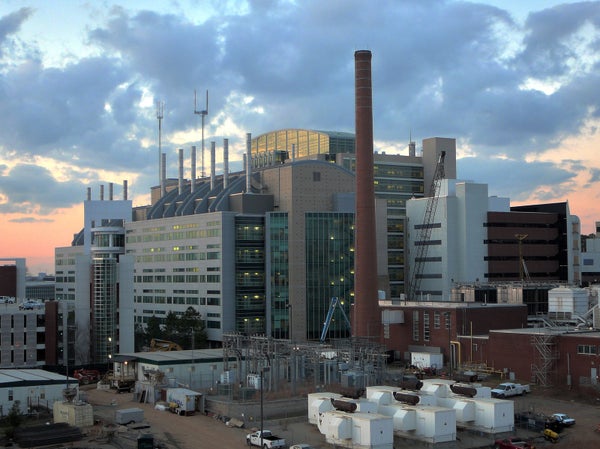

When a long-planned 2017 climate change summit, slated to be held at the U.S. Centers for Disease Control and Prevention, was abruptly canceled without explanation about a week before Pres. Donald Trump’s inauguration, it was not because of a specific directive from his administration. But individuals involved with the conference say political worries influenced the decision.
The CDC had not responded to an e-mailed request for comment by the time of publication on Friday, and it was impossible to confirm any official reason for the altered plans. Some scheduled participants and a former CDC official, however, linked the agency’s move to concerns about attitudes within the Trump administration.
Comments from Trump and some of his cabinet nominees about human-caused climate change (Trump has called it a hoax) had underscored their skepticism, and conference planners preemptively nixed the conference to prevent political backlash, says physician Georges Benjamin, executive director of the American Public Health Association and a scheduled opening speaker at the event. The decision “was informed by the political environment,” Benjamin says. “Obviously it was informed by the fact that there were a lot of mixed messages about support for climate change [science], and during the campaign there was a lot said on that,” he adds.
On supporting science journalism
If you're enjoying this article, consider supporting our award-winning journalism by subscribing. By purchasing a subscription you are helping to ensure the future of impactful stories about the discoveries and ideas shaping our world today.
“It was canceled because of political nervousness about the new administration's attitudes toward climate change work," says Howard Frumkin, former director of the CDC’s National Center for Environmental Health and currently an environmental health professor at the University of Washington's School of Public Health.
In an e-mail to speakers, the CDC summit planners simply wrote, “Unfortunately, we are unable to hold the Summit in February 2017 as scheduled. We are currently exploring options so that the summit may take place later in the year. We will provide additional details in early 2017,” according to a copy of the e-mail seen by Scientific American.
The conference is now back on—but not at the CDC. Former Vice Pres. Al Gore will instead host the event on February 16 at the nonprofit Carter Center in Atlanta. It remains unclear, however, whether any governmental scientists will attend or speak, Benjamin says.
The new conference will be abridged to a one-day summit instead of the original three-day program, and will be sponsored by nongovernmental groups including the Harvard Global Health Institute and the Turner Foundation, along with Gore’s education and advocacy group, the Climate Reality Project.
“I think it’s deeply problematic that the meeting was canceled in the first place,” says Ed Maibach, director of the Center for Climate Change Communication at George Mason University, who had also been scheduled to speak at the CDC conference. “I hope that our nation’s public health agencies—and by that I mean CDC, National Institutes of Health and the Environmental Protection Agency—will be allowed to participate in the replacement meeting, but I don’t know if that’s the case. I’m glad that there is an alternative to the original meeting, but I’m a little concerned that it will be perceived as a political event—not a public health and science event—based on the change in sponsorship.”