
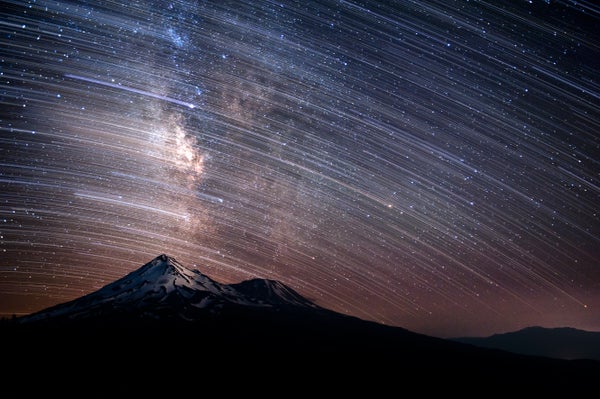
The sky is always changing. The planets move overhead as they trace their paths around the sun, and the moon rotates through the heavens as it circles our own world. Though the stars that provide their backdrop stay fixed in relation to one another, they too spin above as Earth makes its daily revolution and its yearly passage around the sun. To appreciate this ever-changing view, grab these sky maps, go outside at night, and look up!
February—March 2019: Visibility of planets
Mars is the only planet in the evening sky visible with the unaided eye (binoculars are needed to reveal Uranus nearby). Jupiter, Venus and Saturn shine brightly in the morning sky.
On supporting science journalism
If you're enjoying this article, consider supporting our award-winning journalism by subscribing. By purchasing a subscription you are helping to ensure the future of impactful stories about the discoveries and ideas shaping our world today.
February | Event |
|---|---|
1 | Morning sky: moon between Venus and Saturn |
2 | Morning sky: moon near Saturn Moon reaches southernmost declination (–22.4) |
4 | Moon: new moon |
5 | Moon at apogee (406,555 km), apparent diameter 29’ 24” |
12 | Moon: first quarter |
13 | Evening sky: moon in the open cluster Hyades, near Aldebaran Mars 1.1 north of Uranus |
16 | Moon reaches northernmost declination (+20.9) |
18 | Morning sky: Venus 1.1 north of Saturn |
19 | Moon at perigee (356,761 km), apparent diameter 33’ 28” Moon: full moon |
26 | Moon: last quarter |
27 | Mercury: greatest elongation east (18) Morning sky: moon 3 northwest of Jupiter |
28 | Morning sky: moon between Jupiter and Saturn |
Venus shines as a brilliant “star” in the morning sky in the southeast. Throughout February, Venus moves away from Jupiter and towards Saturn some 25 farther to the east. On the morning of February 18th, Venus and the ringed planet will form a close pair, separated by just 1 (about twice the diameter of the full moon). After passing by Saturn, Venus is further heading toward the sun, considerably shortening its visibility in the pre-dawn sky. Whereas Venus rises about three hours before the sun at the beginning of February, it rises only about two hours on March 1st and a little more than one hour by the end of March.

Credit: Ernst Von Voigt
Jupiter is in the constellation Ophiuchus in the morning sky. The giant planet rises ahead of Venus and Saturn. On the morning of February 27th, Jupiter seems to hang just 3 below the waning crescent moon. The moon meets Jupiter again on March 27th.
Saturn reemerges from behind the sun and joins the morning sky. At the beginning of February, the ringed planet rises about 90 minutes after Venus and 90 minutes before the sun. The visibility considerably improves throughout February and March.
March | Event |
|---|---|
1 | Moon reaches southernmost declination (–22.5) Morning sky: moon near Saturn |
2 | Morning sky: moon between Saturn and Venus |
4 | Moon at apogee (406,391 km), apparent diameter 29’ 24” |
5 | Mercury stationary |
6 | Moon: new moon |
7 | Neptun in conjunction with Sun |
11 | Evening sky: moon near Mars |
12 | Evening sky: moon in the open cluster Hyades |
14 | Moon: first quarter |
15 | Mercury in inferior conjunction Moon reaches northernmost declination (+21.3) |
18 | Evening sky: moon near Regulus in constellation Leo |
19 | Moon at perigee (359,377 km), apparent diameter 33’ 14” |
20 | Equinox |
21 | Moon: full moon |
27 | Morning sky: moon near Jupiter Mercury stationary |
28 | Moon: last quarter |
29 | Morning sky: moon near Saturn |
Mars can be seen in the evening sky. It can easily be identified by its reddish light. Since Mars is moving eastward along the ecliptic with about the same speed as the starry sky moves west from day to day (about four minutes due to Earth’s revolution around the sun), the time that Mars sets in the west is relatively consistently during February and March.
Mercury was in superior conjunction (i.e. behind the sun) on January 30th and is now moving eastward away from the sun. In mid-February the innermost planet becomes visible low in the western sky about 30 minutes after sunset. With the unaided eye it might be tricky to spot Mercury at dusk, so use binoculars if possible. (But wait until the sun is completely below the horizon before you start looking in this direction to avoid eye damage.) Viewing conditions will improve until February 27th, when Mercury reaches its greatest elongation 18 east of the sun. When the planet moves closer to the sun again, its brightness diminishes quickly. Therefore, it will be almost impossible to view Mercury after March 4th. The next chance to see this planet will come in June.

Credit: Ernst Von Voigt