
Children born today will face a lifetime of climate change-related health problems, one of the world's oldest and most prestigious medical journals warns in a report released yesterday.
The Lancet's "Countdown: Tracking Progress on Health and Climate Change" says the new era of climate change will "define the health of an entire generation" — unless there is significant intervention.
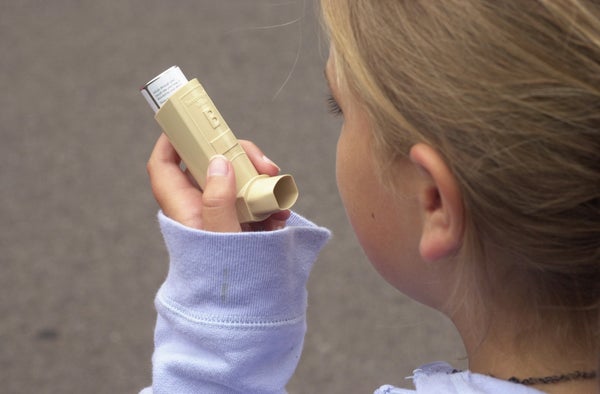
The health impacts flagged by the report start at the prenatal level with a heightened risk of low birth weight and neonatal death and continue through childhood and adolescence with potential lung problems, asthma attacks and insect-borne diseases. Older adults would see increasing vulnerability from extreme heat.
On supporting science journalism
If you're enjoying this article, consider supporting our award-winning journalism by subscribing. By purchasing a subscription you are helping to ensure the future of impactful stories about the discoveries and ideas shaping our world today.
The report is a collaborative effort by more than 100 experts from global institutions, including the World Health Organization and World Bank, that tracks the impact of climate change on human health based on 41 indicators.
Dr. Richard Carmona, the former U.S. surgeon general and professor at the University of Arizona, said the report shows climate change is already upon us.
"There is nobody in this world today that isn't suffering some form of the impact of climate change," he said.
Last year was the fourth hottest year on record. As a result, the report says a record-breaking 220 million additional people aged 65 and older were exposed to extreme heat. Japan saw 32 million of its elderly exposed to extreme heat, the equivalent of almost every person in that age group experiencing a heat wave.
Unusually high temperatures in the United States led to 81.4 million lost work hours in 2018, particularly in the industrial and agricultural sectors.
At the same time, the report notes that U.S. energy-related carbon dioxide emissions rose by 3.1% in 2018 — the largest increase in emissions since 2010.
Dr. Renee Salas, the lead author of the report's U.S. policy brief, said cities are recognizing that climate change is affecting their residents' health. Nearly two-thirds of 136 cities surveyed in the report last year have completed climate risk assessments or are doing so.
But Salas said funding is "grossly inadequate" for the challenges ahead. Moreover, she said, the health care costs of climate change are often left out when it comes to discussing climate action.
"Climate action is action to improve health," she said. "Those are directly correlated, and we know that action on climate change is going to inevitably reduce health care costs."
While the benefits of climate action varied by region, the report noted a study that found the health savings from renewable energy policy in the Rust Belt region exceeded the policy cost by 34%. The report said that if the current emissions trajectory continues, then children, particularly children of color, will face billions of dollars in health-related costs throughout their lives.
During a briefing yesterday, Carmona said he was frustrated that the scientifically vetted issues of climate change were being reduced to political currency.
"Often I found that our leaders and certain leaders are really just looking for any information that will support their preconceived notions," he said. "Which sometimes is deleterious to health."
Salas echoed his sentiments, saying solutions that include shifting toward clean energy are available, but political will is lacking.
Solutions outlined in the report include putting a price on carbon emissions, transitioning to cleaner transportation fuels, and boosting spending on adaptation in health and health care.
"The evidence clearly shows that treatment is available," she said. "We just need to act before it's too late."
Reprinted from Climatewire with permission from E&E News. E&E provides daily coverage of essential energy and environmental news at www.eenews.net.