
More than 500 cities around the globe are already feeling the effects of climate change, according to a report released this week.
“Cities at Risk” by the environmental nonprofit CDP found that 85% of cities surveyed last year are reporting climate hazards—including flooding in London, extreme winters in New York City, and forest fires and extreme heat in Quito, Ecuador.
Kyra Appleby, director of CDP’s cities program, said 620 cities responded last year to the annual survey that began in 2011 with just 48 responses. The organization—which has offices in London, New Dehli and New York—saw the number of respondents surge after the Paris Agreement was drafted in 2015.
On supporting science journalism
If you're enjoying this article, consider supporting our award-winning journalism by subscribing. By purchasing a subscription you are helping to ensure the future of impactful stories about the discoveries and ideas shaping our world today.
The top reported climate hazards were floods, heat waves and droughts. They heighten risks to already vulnerable people and increase demands for public health services.
Despite these hazards, CDP found only 46% of cities are carrying out vulnerability assessments to see how they can adapt to climate change. Those that have done the assessments, the report says, are taking six times as many adaptation measures as those cities that haven’t.
“Cities have a lot of agency especially in adaptation actions,” Appleby said. “They can map what the physical hazards are, and then because they are closest to their citizens and population, they can understand what the impacts can be.”
Among the adaptation measures cities are taking: flood mapping, crisis management, tree planting and long-term planning. Appleby said it’s likely all cities are taking action, although they might not be reporting it.
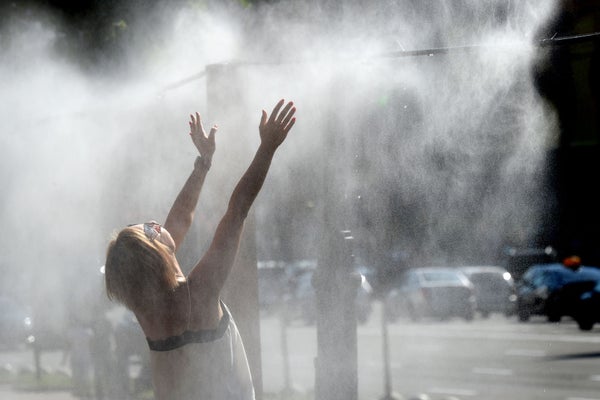
“We’re seeing cities opening up cooling centers, they’re putting up canopies and planting trees,” Appleby said. “But they might not think of it as an adaptation action.”
The report says cities must balance policy solutions with investments in infrastructure projects to prepare for the effects of climate change.
The report comes as the world is becoming increasingly urbanized. An estimated 70 million people will move to metropolitan areas each year over the next few decades. By 2050, two-thirds of the global population will live in cities. A C40 Cities report, “The Future We Don’t Want,” says eight times as many people in cities will be exposed to high temperatures by 2050, and 800 million more could be at risk of rising seas and storm surges.
At the same time, cities are not preparing for future climate hazards. The report found cities expect 42% of climate risks to manifest in the short term, compared with 11% in the long term.
Appleby said what cities are reporting doesn’t line up with data from the Intergovernmental Panel on Climate Change, which says future impacts of climate change will be more severe than what is being felt right now.
Climate change, left unchecked, will undo many of the economic and social gains in cities in recent decades, Appleby said.
“All city authorities should undertake comprehensive vulnerability assessments,” she said. “Only then will cities be able to plan for the new normal brought about by our changing climate.”
Reprinted from Climatewire with permission from E&E News. E&E provides daily coverage of essential energy and environmental news atwww.eenews.net.
