
There’s no balancing this ledger.
Insurance companies face greater dangers from climate change, including weather-related catastrophes and court fights, than they do silver linings, according to a report released today by Moody’s Investors Service, the ratings agency.
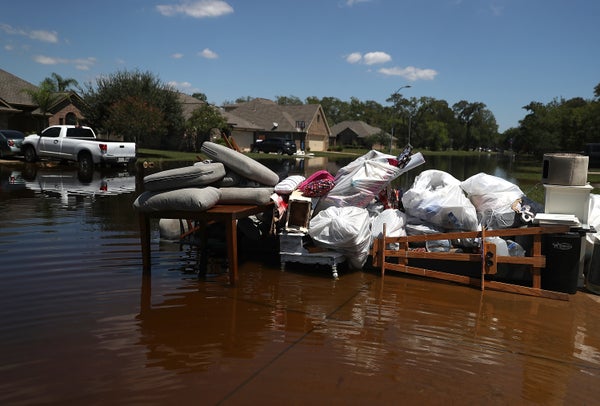
From payouts after a hurricane, flood or other disaster to lawsuits that could wrap them up in costly litigation, insurers and reinsurers are severely exposed to the perils of climate change, Moody’s said.
On supporting science journalism
If you're enjoying this article, consider supporting our award-winning journalism by subscribing. By purchasing a subscription you are helping to ensure the future of impactful stories about the discoveries and ideas shaping our world today.
“We felt on balance that it was a net negative impact,” said James Eck, the lead author. “There’s a lot of areas where they could be exposed.”
A draft of the report shows insurance losses—from cyclones, storms, floods, extreme temperatures, droughts and fires—have risen in recent decades as natural disasters have grown more common.
The insurance industry is among the most exposed sectors of the global economy to the effects of climate change, and those risks could grow as coastal cities expand.
In a statement, David Kodama, assistant vice president of research and policy analysis at the Property Casualty Insurers Association of America, said he found the conclusions of the report “appropriate,” adding that the industry is ready for natural catastrophes. “The regulatory environment, landscape and political interference will also increase the uncertainty and risks for insurers,” he said.
As sea levels rise, “you just have that much more high-value real estate” at risk, Eck said.
Warren Buffett, chairman of Berkshire Hathaway Inc., a major player in the insurance industry, highlighted the risk of hurricanes last month. Still, he has said the company is prepared and can rewrite its policies each year to account for those risks (Climatewire, Feb. 27).
That’s a common line from insurers. But it’s not realistic, said James Jones, director of the Katie School of Insurance & Financial Services at Illinois State University.
“You can do this on an individual basis,” Jones said. “You can attempt to reprice your policy, but it doesn’t mean that you’re going to get the price you want.”
Insurers cannot block off entire regions from their business, like the southeastern United States, which is acutely exposed to hurricanes and flooding.
“There’s not a business model for that,” Jones said. “I just don’t think you can walk away from entire books of business.”
Financial losses in the private sector and government-backed programs hit $134 billion last year, according to broker Aon Benfield, making it the second-most expensive behind 2005, when Hurricanes Katrina and Rita struck.
Reprinted from Climatewire with permission from E&E News. E&E provides daily coverage of essential energy and environmental news at www.eenews.net.