
The international treaty that saved the Earth’s ozone layer is often considered one of the most successful environmental efforts in history. Now there’s evidence it did more than just preserve a critical shield for the planet.
The 1987 Montreal Protocol on Substances That Deplete the Ozone Layer effectively phased out the use of chlorofluorocarbons—a powerful, ozone-eating industrial chemical—and the once-notorious Antarctic “ozone hole” they created is in recovery. Eventually, the ozone layer is expected to return to its original condition.
At the same time, scientists say, the Montreal Protocol had some important side benefits. Without it, the impact of global warming likely would be even worse.
On supporting science journalism
If you're enjoying this article, consider supporting our award-winning journalism by subscribing. By purchasing a subscription you are helping to ensure the future of impactful stories about the discoveries and ideas shaping our world today.
That’s because the same chemicals that caused the ozone hole are also potent greenhouse gases—shorter-lived but many times more powerful in the atmosphere than carbon dioxide. Recent research suggests that at the same time they were chewing away at the ozone layer, they also were helping to heat up the Earth’s climate.
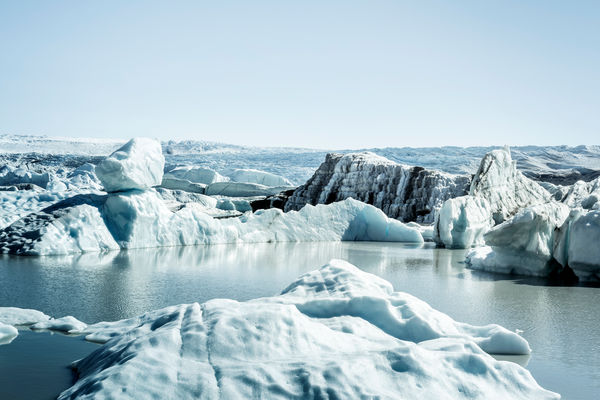
A new study, out yesterday in the journal Nature Climate Change, has helped put their influence into perspective. The research finds that ozone-depleting chemicals in the atmosphere may have driven as much as half of all the warming the Arctic experienced between 1955 and 2005.
That’s a powerful finding. The Arctic is the fastest-warming region on Earth.
The study doesn’t diminish the impact of global carbon dioxide emissions or other greenhouse gases in the atmosphere. Carbon dioxide remains the most significant contributor to human-caused climate change since the Industrial Revolution.
But it does acknowledge the surprising influence other greenhouse gases have had on the Earth’s climate. And it points to the power of global cooperation to drive meaningful environmental change.
“The [Arctic] warming will not be as great as it would have been without the Montreal Protocol,” said study co-author Michael Previdi, a climate scientist at Columbia University. He added, “You can say the same thing about the future of global temperature change.”
An unexpected impact
To date, studies on ozone and climate have focused on the ways the damaged ozone layer has physically affected the atmosphere. Research suggests the ozone hole altered the stratosphere in ways that have caused some large-scale changes in the flow of air around the Southern Hemisphere, including shifts in Antarctic wind patterns and the behavior of the jet stream.
The new research takes a different approach—it looks at the direct effects of ozone-eating chemicals on global temperatures.
The study employs a simple method to look at the issue. Using an ensemble of climate models, it compares two sets of simulations—one that reflects actual, historical emissions of ozone-depleting substances and one that assumes no growth in these emissions since 1955.
The study found that the historical simulation with growing emissions resulted in about twice as much warming. Put another way: If ozone-depleting substances had remained constant at their 1955 levels, the Arctic would have warmed about half as much.
Other recent studies, with a more global approach, also have found the Montreal Protocol had a major—if unintended—climate impact.
One study, published last month in Environmental Research Letters, found the Montreal Protocol likely prevented more than a degree Celsius of warming—or around 1.8 degrees Fahrenheit—over the Arctic since it went into effect. And by 2050, it may have offset as much as 3 to 4 C of Arctic warming and about a degree on average worldwide.
Another study, published in 2013, suggested that slashing the use of CFCs may have contributed to a slowdown in the rate of global warming around the turn of the century.
This kind of research underscores the usefulness of investigating the climate impacts of specific classes of greenhouse gases, said atmospheric chemist David Fahey, a NOAA scientist who commented on the new paper for E&E News.
That includes the impact of substances that are investigated less frequently than bigger players, such as carbon dioxide and methane, he said. As the ozone research revealed, their impact over time is sometimes greater than expected.
Addressing these less talked-about greenhouse gases can make a significant difference in global temperatures—on top of efforts to cut down on the world’s carbon dioxide emissions.
This is the idea behind a proposed update to the Montreal Protocol known as the Kigali Amendment, which aims to phase out the use of hydrofluorocarbons. HFCs rose to prominence as a replacement for ozone-eating CFCs, but scientists since have recognized that HFCs are potent greenhouse gases.
The Kigali Amendment would reduce the global consumption of HFCs by 80% by 2047—potentially preventing as much as half a degree Celsius of global warming by the end of the century.
Under opposition from the Trump administration, the U.S. has not yet ratified the agreement. And proposals to limit domestic consumption of HFCs have been politically divisive.
But if there’s anything the Montreal Protocol has proved so far—even if unintentionally—it’s that these kinds of phaseouts can have a significant impact.
“[I]f our findings are confirmed by future studies, the role of the Montreal Protocol as a major environmental treaty will assume a new dimension,” wrote the authors of the new study.
Reprinted from Climatewire with permission from E&E News. E&E provides daily coverage of essential energy and environmental news at www.eenews.net.