
Editor’s Note (02/08/18): Scientific American is re-posting the following article, originally published August 15, 2016, in light of the 2018 Winter Games which begin on February 9 in PyeongChang, South Korea.
Throughout this month the world’s top athletes will take to the field, court and pool at the Summer Olympics in Rio de Janeiro. Some, however, will far outshine the others and land numerous medals. Researchers have a special term for these best of the best: superelites.
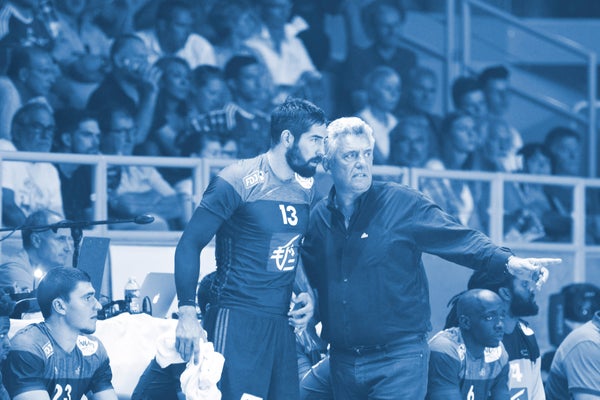
What differentiates a superelite from someone who competes at the Olympics but goes home empty-handed? New research suggests it can come down to the coach–athlete relationship. According to findings presented in November at the World Class Performance Conference in London, superelites felt that their coaches fully satisfied their emotional needs by acting as friends, mentors and unwavering supporters—in addition to providing superb technical support. High-performing athletes who were not medaled did not feel that way. “This turns on its head a long-held view that we must simply pair the best technical and tactical coaches to our best athletes to achieve ultimate performance,” says Matthew Barlow, a postdoctoral researcher in sport psychology at Bangor University in Wales, who led the study.
On supporting science journalism
If you're enjoying this article, consider supporting our award-winning journalism by subscribing. By purchasing a subscription you are helping to ensure the future of impactful stories about the discoveries and ideas shaping our world today.
Barlow and his colleagues were commissioned to find out what it takes to win multiple gold medals by the governmental organization UK Sport, which promotes the nation’s elite sports and athletic development. The researchers initially identified 43 variables that reliably predicated the probability that someone would become a superelite. One of those factors was the coach–athlete relationship, so UK Sport funded a second in-depth analysis that focused solely on this aspect.
So Barlow and his colleagues recruited 16 male and female superelite athletes, all of whom had won gold at a major championship (such as the Olympics). They also recruited 16 athletes who had competed in such championships but never medaled. The groups were matched in sport, age and gender. The scientists then conducted in-depth interviews with the athletes as well as their parents and coaches. After analyzing the results they found that all the athletes said they were technically supported by their coaches—but it was the superelites who reported they also enjoyed thorough emotional support. “Superelite athletes perceived their need for emotional and esteem support were met in a way that the elites did not,” Barlow says.
Coaches of superelites acted almost as surrogate parents, praising their athletes’ efforts, emphasizing unwavering belief in them, providing positive feedback and taking an interest in personal lives. “A cyclist might come in and the coach says, ‘Hey, you’re not looking quite right, let’s have a coffee and talk about difficulties you might be having at home,’” Barlow says. “They have a bond that goes beyond spreadsheets, power outputs and graphs.” Some elite athletes, on the other hand, felt invisible to their coaches or sensed their mentors seemed to expect failure at key moments when they most needed support.
Coaching, of course, isn’t the only factor that contributes to an athlete’s rise to superelite status. The original study—which is the most comprehensive look at top-performing athletes to date—also revealed significant psychological and life history differences between superstars and their elite counterparts. For example, superelites tended to have experienced a childhood trauma as well as a mid-career turning point (see: “The Making of an Olympian”). But Barlow and his colleagues still think that the coach–athlete relationship plays a significant role when it comes to shining on the Olympic field.
This study provides evidence for what experts have previously hypothesized about coaching, says Jonathan Fader, a clinical and sport psychologist in New York City who was not involved in the study. The best coaches, he explains, “spend their time using their own playing experience or coaching acumen to help a player build and maintain confidence about the fundamental and unchanging ability that they have. This usually involves a positive, thoughtful and understanding relationship.”
Up until now UK Sport has paired athletes and coaches based only on an athlete’s ability and a coach’s record of success. But the organization is now working with Barlow and his colleagues to design a new method that takes into account the full relationship between the two. UK Sport also hopes to train the competitors to be their own coaches in some ways. “Another challenge we’re working on is how to develop self-sufficient athletes,” Barlow says. “Being aware of the perceived needs of an athlete—and designing a structure around them—is very different than pandering to their every whim.”