
WASHINGTON—Congress late Wednesday approved federal funding that will provide $1.1 billion to fight the Zika virus, along with money necessary to keep the government running through Dec. 9.
The Senate vote was 72 to 26. Hours after the Senate approval, the House of Representatives followed suit, passing its bill by a 342 to 85 vote.
As the Sept. 30 deadline to reach a budget deal drew near, the Senate leadership crafted a compromise that ended months of bickering.
On supporting science journalism
If you're enjoying this article, consider supporting our award-winning journalism by subscribing. By purchasing a subscription you are helping to ensure the future of impactful stories about the discoveries and ideas shaping our world today.
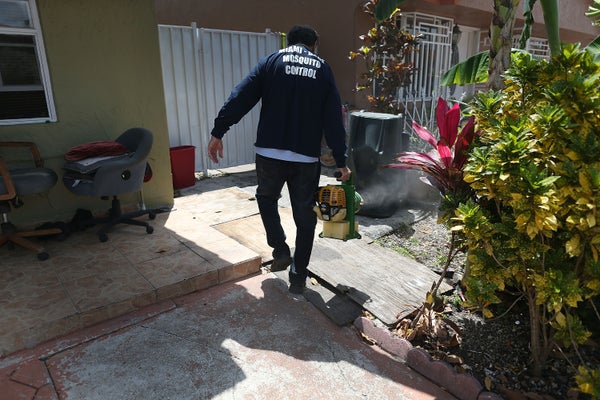
The money will go to Zika vaccine research and health care in the hard-hit southern states, such as Florida, as well as Puerto Rico. It also will be used to reduce exposure to mosquitoes carrying the virus.
When President Obama first asked Congress for $1.9 billion to fight the mosquito-borne virus, lawmakers from both parties have accused the other of endangering pregnant women and babies by refusing to come to an agreement.
The delay has aggravated public health officials, residents of vulnerable states in the South, and those running for reelection in November.
“We are pleased that Congress has put aside political games and finally provided this urgently needed funding to combat the Zika crisis,” said Dr. Willie Parker, chairman of Physicians for Reproductive Health.
“However, our work to protect those most at risk is just beginning,” Parker said. “Those already living with Zika and those most vulnerable, including the patients I see across the South, deserve compassion and access to the care they need without shame or stigma.”
Zika first appeared in 1947, but wasn’t a hot research topic for many years. The virus first alarmed doctors in Northeastern Brazil about 13 months ago, after a cluster of babies were born with severely underdeveloped heads. Soon after, researchers linked the condition, called microcephaly, to a Zika infection of the fetus. Babies who were infected prenatally can also suffer hearing or vision loss.
In adults, the virus can also cause neurological problems. Besides transmission by mosquito, Zika can also be transmitted by sex.
Over the summer, the number of cases in the United States has risen, including those transmitted locally. Earlier on Wednesday, officials said that the death of a Utah man in July was the result of Zika infection.
For several months, Health and Human Services department officials have told lawmakers that the funding for vaccine development at the would be depleted by the end of August; and that they were running out of money transferred from other programs, such as Ebola.
In May, the Senate passed a $1.1 billion Zika package. But the proposal got stuck in the Senate, after House and Senate Republicans added a provision that would have blocked clinics working with Planned Parenthood in Puerto Rico from access to the money.
Other conflicts that further dragged out the budge process grew out of disagreements over flood relief for Louisiana, and assistance for Flint, Mich., which has suffered a massive lead poisoning problem in its water.
Republished with permission from STAT. This article originally appeared on September 28, 2016