
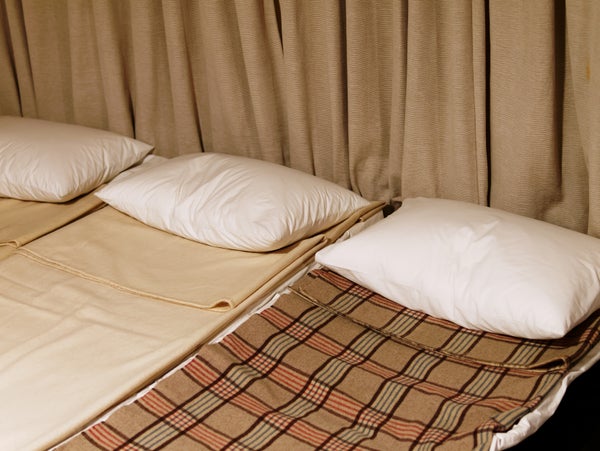
SEATTLE—At a nonprofit providing health care and housing to the homeless population in the city, employees have begun a sprint to sanitize their facilities. Because the organization, the Downtown Emergency Service Center (DESC), is located in one of the U.S.’s first hotbeds of novel coronavirus infection, workers are bracing themselves for a wave of medical needs in the homeless community, which is especially vulnerable during disease outbreaks. The situation in Seattle may be a preview of things to come for other cities around the nation whose population of people without homes could be hit hard as the virus spreads.
Several Seattle organizations provide shelter and health care to the underprivileged. But in a city with such a large homeless population—the third highest in the U.S., after New York City and Los Angeles—margins are already thin. “Frankly, we struggle to meet their full array of needs as it is,” says Daniel Malone, executive director of DESC. “The prospect of adding on another illness that may have more severe effects on people with underlying conditions is quite worrisome.”
The novel coronavirus seems to spread easily from person to person. It started cropping up in West Coast states starting in late January, and the nation’s first deaths from the pathogen occurred in Washington State on February 26. At the time of this writing, the U.S. Centers for Disease Control and Prevention has reported 162 cases of infection in Washington State, and 116 have been confirmed in the state’s King County, which includes Seattle.
On supporting science journalism
If you're enjoying this article, consider supporting our award-winning journalism by subscribing. By purchasing a subscription you are helping to ensure the future of impactful stories about the discoveries and ideas shaping our world today.
For the city’s more than 12,000 people living without homes, the virus could be a serious threat. These individuals may be more susceptible than the general population to some respiratory illnesses such as COVID-19 (the disease caused by the new coronavirus), says Kira Newman, an infectious disease researcher at the University of Washington.
“Coronaviruses spread through droplet transmission,” she says, so sanitizing surfaces and maintaining a distance between people are key to containing it. These precautions are not always practical for homeless individuals, who often lack access to soap and hot water and stay in crowded shelters. They also have a high rate of poorly treated chronic illnesses, putting them at a greater risk of a severe COVID-19 infection. Once people without homes get sick, they may lack the proper care required to get better, including a comfortable place to rest, warm liquids and medications.
Unhoused people throughout the nation may soon face similar challenges. Across the U.S., more than 560,000 individuals surveyed on one night in 2019 experienced homelessness, according to the U.S. Department of Housing and Urban Development’s most recent report on the subject. Some advocates for the homeless in other parts of the country are watching the coronavirus epidemic unfold in Seattle as they prepare for it to hit their own region. The National Coalition for the Homeless, a nonprofit advocacy group based in Washington, D.C., published a list of advice and resources for people without homes to help them cope with an outbreak. It advises them not to touch their eyes, nose or mouth and to cover coughs and sneezes. For those experiencing symptoms, including fever, cough or shortness of breath, it recommends visiting a hospital or health care center, such as one in the National Health Care for the Homeless Council’s directory, which lists free or low-cost care providers. Washington State’s King County asks all residents to visit the emergency room only if it is absolutely necessary. Emergency rooms cannot deny care to someone with an emergency medical condition based on that person’s ability to pay under the Emergency Medical Treatment and Labor Act.
Megan Hustings, managing director of the National Coalition for the Homeless, says health care providers require support from government officials and community members, too. Clinics that serve the homeless will need test kits and protective gear for their employees, she says. People handing out care packages should consider adding hand sanitizer (or soap) and wipes to them. Sick people will need shelter, access to bathrooms and a place to wash their hands. On March 5 Seattle’s mayor Jenny Durkan announced plans to expand homeless shelters to make room for a total of 100 additional people during the coronavirus emergency. The added space will be ready in two to three weeks, according to the mayor’s office.
Hustings also points to the need for better education. As local governments alert citizens about where the coronavirus has appeared, they need to be sure that information is trickling through homelessness service providers to unhoused populations, she says.
The outbreak in Seattle may help the rest of the nation prepare, as local epidemiologists use it to enhance their research. Newman and her colleagues at the Seattle Flu Study are testing volunteers for coronavirus, including those in the homeless population, to learn more about the virus. So far, researchers know very little about how viruses, in general, spread through homeless populations, she says. “Hopefully, that’s something we’ll learn more about through the research that we’re doing now,” Newman adds.
Read more about the coronavirus outbreak here.