
The Trump administration violated the Clean Air Act by not taking action on harmful emissions from landfills, a federal court ruled yesterday.
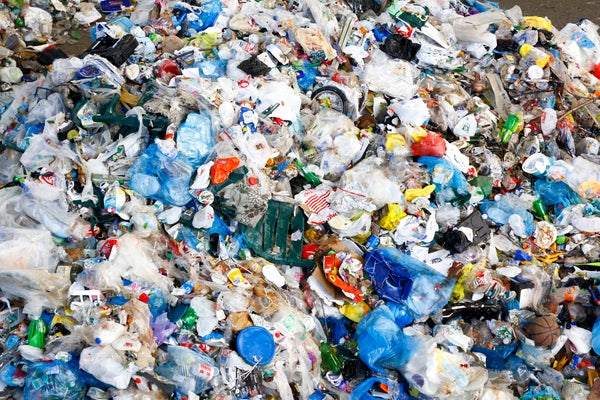
The U.S. District Court for the Northern District of California found EPA failed to meet its statutory obligation to restrict climate-warming methane and various conventional pollutants that spew from municipal solid waste landfills across the country.
The waste sites are the third-largest emitters of human-caused methane in the United States. They also release benzene and other pollutants that can harm human health.
On supporting science journalism
If you're enjoying this article, consider supporting our award-winning journalism by subscribing. By purchasing a subscription you are helping to ensure the future of impactful stories about the discoveries and ideas shaping our world today.
The Obama administration crafted landfill emissions guidelines in 2016 after years of consideration, but Trump officials have not taken the requisite next steps to review state implementation plans or craft a federal program.
“There is no denying EPA’s clear failure to meet its nondiscretionary duties,” Judge Haywood Gilliam Jr. wrote.
Proponents of tight restrictions on landfill pollutants cheered the ruling as another rebuke to Trump officials’ efforts to delay or roll back various environmental standards.
“Courts are showing no patience for EPA’s blatant violations of law,” David Hayes, executive director of the State Energy & Environmental Impact Center, said in a statement.
“Thankfully, California Attorney General Xavier Becerra and other state attorneys general are holding the Trump Administration accountable for outrageously flouting the rule of law,” he added later.
Government lawyers did not dispute allegations that EPA shirked its mandatory duties; instead, they argued that the coalition of states challenging the agency lacked legal standing to bring the case because they failed to show a clear connection between EPA’s inaction and specific harm the states would face.
Gilliam, an Obama appointee, rejected the argument, citing the “special solicitude” afforded to sovereign states in litigation, as laid out in the landmark Massachusetts v. EPA ruling in which the Supreme Court ruled Massachusetts could challenge EPA’s refusal to regulate greenhouse gases.
The state coalition in the landfill case included California, Illinois, Maryland, New Mexico, Oregon, Pennsylvania, Rhode Island and Vermont.
“Noxious landfill emissions affect everyone, but disproportionately hurt our most vulnerable communities, impacting their health, environment, and standard of living,” Becerra (D) said in a statement. “Once again, we’ve held the EPA accountable for its failure to perform its mandatory duties under the Clean Air Act, and for its unwillingness to protect public health.”
The Environmental Defense Fund intervened in the case on the states’ side.
“I definitely see this as part of the streak of Trump administration rollbacks that are not holding muster in court,” EDF attorney Rachel Fullmer told E&E News.
Under the court’s order, EPA must make final decisions approving or disapproving existing state plans by Sept. 6 and finalize a federal plan by Nov. 6—keeping the court apprised of its progress through status reports every 90 days.
EPA said it is reviewing the decision.
The agency is separately working on a proposal to formally delay implementation deadlines for landfills. The new deadlines would more closely align with those in the Trump administration’s proposed replacement for the Obama-era Clean Power Plan, which targeted greenhouse gas emissions from the power sector.
Reporter Jennifer Hijazi contributed.
Reprinted from Climatewire with permission from E&E News. E&E provides daily coverage of essential energy and environmental news atwww.eenews.net.