
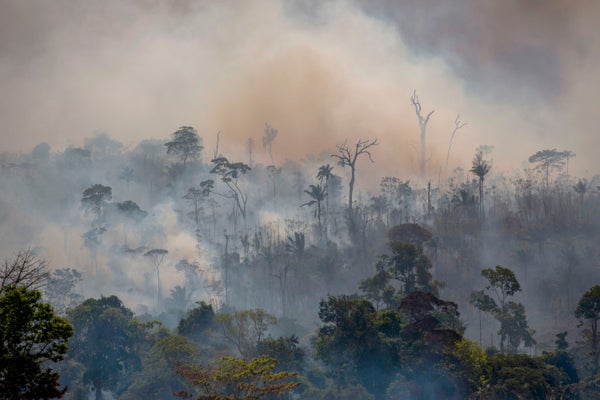
Using satellite data, experts have already identified two major blazes in deforested areas of the Brazilian Amazon rain forest—more than two months before the start of the annual fire season. At the same time, the number of new coronavirus cases in the country have dramatically increased.
In May a team from Brazil’s National Institute for Space Research warned of the potential consequences of fires in the Amazon coinciding with the pandemic. Respiratory problems from the fine-dust pollution caused by the fires could result in a significant rise in hospitalizations. If they peak at the same time as the COVID-19 pandemic, the two events could overload the health system, the report said. Indigenous communities in the Amazon region are particularly vulnerable to the novel coronavirus that causes the disease.
[What can be done to address COVID-19 in Latin America, the current world epicenter of the disease]
On supporting science journalism
If you're enjoying this article, consider supporting our award-winning journalism by subscribing. By purchasing a subscription you are helping to ensure the future of impactful stories about the discoveries and ideas shaping our world today.
There are several signs that fires in the Amazon basin could be particularly severe this year. One is that extremely large areas are being cleared. Deforested areas are later burned, which can result in uncontrolled blazes.
Already 89 percent of the total forest area has been cleared from August 1, 2019, to May 14, 2020, compared with the previous reference year of August 2018–July 2019. International protests in 2019 prompted efforts to combat fires in the rain forest, halting some of the deforestation. In addition, the Atlantic Ocean is currently warmer than usual, which typically leads to drought in the southwestern portion of the Amazon basin.
The tiny dust particles generated by forest fires cause respiratory diseases every year in Brazil’s Amazon states, especially among children.There is also evidence that air pollution is more likely to cause severe coronavirus infections. After the U.S., Brazil currently has the largest number of confirmed coronavirus cases worldwide, with around 1,000 people dying from the disease every day. The country’s government recently tried to hide the number of infections. And the administration its president Jair Bolsonaro is in the midst of a severe political crisis.
This article originally appeared in Spektrum der Wissenschaft and was reproduced with permission.
Read more about the coronavirus outbreak from Scientific American here. And read coverage from our international network of magazines here.