
Whether or not CRISPR/Cas9 genome editing can create superheroes as depicted on a new Netflix show, what it’s indisputably good at is this: editing a lot of genes really, really fast.
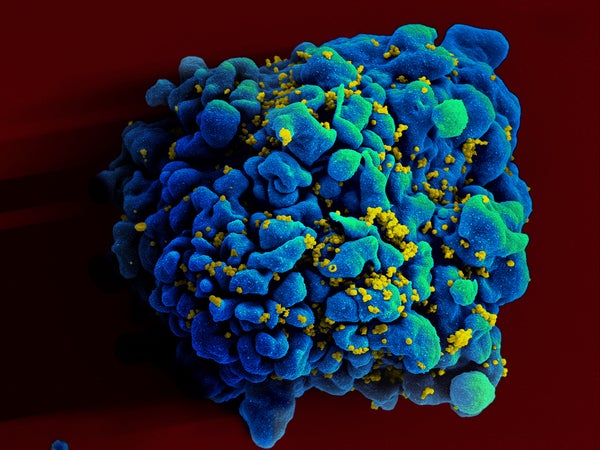
In research published Tuesday in Cell Reports, scientists announced that they had used CRISPR/Cas9 to test gene after gene after gene in human immune system cells—45 genes in all, sometimes simultaneously and sometimes individually—to identify those that have anything to do with infection by theHIV virus, which causes AIDS when it infiltrates those T cells.
For years, scientists have known that mutations in some genes can keep HIV from getting inside T cells (editing genes to create that protective mutation is being tested in a clinical trial). But it never hurts to find more ways to block HIV infection, scientists at the University of California, San Francisco, and its Gladstone Institutes figured.
On supporting science journalism
If you're enjoying this article, consider supporting our award-winning journalism by subscribing. By purchasing a subscription you are helping to ensure the future of impactful stories about the discoveries and ideas shaping our world today.
Enter CRISPR/Cas9, which is so easy to use that even small labs are jumping into the CRISPR pool in a way they couldn’t with the previous generation of genome-editing tools.
When scientists want to edit scores of genes to see which changes protect T cells against HIV, they need to build a separate CRISPR/Cas9 assemblage of multiple molecules each time. Because that’s so easy, the UCSF scientists marched through the genome in human T cells like ants marching across a picnic spread: a project that would take years with the previous generation of genome editing tools instead took months.
Using a clever way that some of the same researchers invented last year to get CRISPR/Cas9 into cells—a jolt of electricity makes cells open their entry gates—they sent one CRISPR complex after another—149 in all—into hundreds of thousands of T cells isolated from the blood of healthy volunteers.
After each edit, the scientists, co-led by UCSF/Gladstone medical geneticist Nevan Krogan and immunologist Dr. Alexander Marson, tested the now-mutated T cells to see if they kept HIV out entirely, kept it from insinuating itself into the T cell’s genes (which is how the virus replicates), or otherwise hobbled infection. They wound up with half a dozen genes (with names like CXCR4, CCR5, LEDGF, and NUP153) whose excision thwarted HIV wholly or partly.
The hope is that using genome editing to change one or more such genes in T cells will prevent or vanquish AIDS. Current therapies keep infections at bay but do not eliminate the virus from a patient’s immune system. Patients must therefore take antiretroviral drugs for the rest of their lives. In its clinical trials of editing the CCR5 gene, Sangamo Biosciences has found that patients’ viral load fell and, in some cases, stayed low even without HIV/AIDS drugs; updated results are expected in 2017, said company spokesperson Elizabeth Wolffe.
Whether editing genes other than CCR5 might help patients is unknown, said Michael Holmes, Sangamo’s vice president of research. The UCSF study did “a good job” of using CRISPR to identify additional potential HIV targets, he said, but “CCR5 and CXCR [another gene] still seem to be the best targets, which is not to say that additional ones might not be useful.”
Editing the genomes of T cells to prevent, let alone cure, HIV/AIDS faces stiff headwinds. Half a dozen papers since 2013 have reported varying degrees of success using CRISPR to block HIV infection in animals or in cells growing in lab dishes, but in some cases HIV overcomes CRISPR’s edits. Multiple genome edits, simultaneously or sequentially, might be necessary.
Whether anyone without first-world medical insurance will be able to afford that remains very much in question. But the UCSF scientists are hopeful that drugs could mimic the genome editing they did, and become at least as affordable as today’s HIV/AIDS drugs.
Republished with permission from STAT. This article originally appeared on October 21, 2016