
Many of us are familiar with crowdfunding: donating money to people and their projects using one of many platforms on the Internet. During the pandemic, people have sought help through crowdfunding in record numbers, making the activity seem like part of the American safety net.
Some of these campaigns are truly transformative. Brandon Stanton—of the popular Humans of New York project—started a GoFundMe campaign for Kasson, a young man who had been blinded in an attack. Kasson's campaign has raised more than $675,000 from nearly 23,000 donors since late 2021. Contrast that with the story of Jim (whose name has been changed to protect his privacy), who didn't have the benefit of such exposure. A single father of a disabled son, Jim wrote that after his own medical crisis, he needed help “to not lose our home.” Jim was asking for $2,000 to avoid eviction. He did not get a single donation.
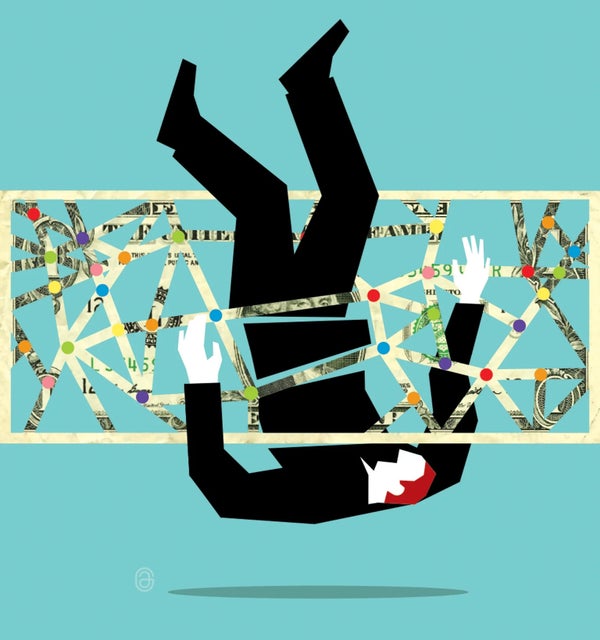
Although stories like Kasson's are more well known, our research into this new form of charity has revealed, distressingly, that many campaigns end up like Jim's. GoFundMe and similar platforms have been largely unsuccessful in solving financial problems for most of the people who use them. Technological fixes are unlikely to change these dynamics because they're unlikely to counteract the entrenched effects of income inequalities, social network disparities and social media dynamics.
On supporting science journalism
If you're enjoying this article, consider supporting our award-winning journalism by subscribing. By purchasing a subscription you are helping to ensure the future of impactful stories about the discoveries and ideas shaping our world today.
We have found that nine out of 10 campaigns do not reach their financial goals, and the median campaign raises only a few thousand dollars. In 2020 one third of medical campaigns received no donations at all. Meanwhile top campaigns of many types on the site can raise millions of dollars from thousands of donors.
And crowdfunding seems to work best for people with very large social media followings. Kasson's story, for example, appealed on its own merits, but his campaign benefited enormously from Stanton's extensive social media networks.
We've also learned that before a worthy crowdfunding campaign can receive a donation, it must first get a donor's attention, typically via a post on a social media platform such as Facebook, Instagram or Twitter. People simply don't have the capability to prioritize the enormous volume of content available, so these platforms choose for us, highlighting via their algorithms a limited selection of online content based on factors such as popularity, when the content was created, geographic or social proximity, what advertisers pay for, or alignment with our interests.
In this so-called attention economy, we can feel overwhelmed by the amount of content we see while often failing to recognize that what we do see is but a tiny, highly curated fraction of the information on a platform. What this means is that only a few crowdfunding campaigns ever reach large audiences and that audiences are far more likely to see already successful campaigns.
Crowdfunding can work moderately well for those who have high-income friend networks. People tend to have social ties to those who are similar to them in economic, educational and cultural terms; social scientists call this “homophily.” We recently found that U.S. campaigns started in counties where the median income was in the top 20 percent earned more than twice as much as those started in counties in the bottom 20 percent. When it comes to crowdfunding, social networks amplify income inequalities.
These effects are the result not of differences in generosity but of differences in income and resources. In fact, research routinely finds that Americans with the lowest incomes are the most generous. A recent survey found that nearly 40 percent of those donating to campaigns had household incomes of less than $60,000; more than a third were without work when they donated. But without significant income to draw on, these donations are often small and spread out among a larger number of people needing help.
GoFundMe itself understands that it cannot provide an adequate fix to the unmet basic needs that fill its site. In February 2021 its CEO, Tim Cadogan, implored Congress to pass further pandemic aid, arguing that “we can't do your job for you.” Yet COVID support programs have largely ended, even as many people in the U.S. continue to face financial hardships. Unless legislators decide to extend and expand essential support programs akin to the highly successful Child Tax Credit, people will keep seeking help online, where successes are few and inequalities are more often amplified than ameliorated.
JOIN THE CONVERSATION ONLINE Visit Scientific American on Facebook and Twitter or send a letter to the editor: editors@sciam.com