
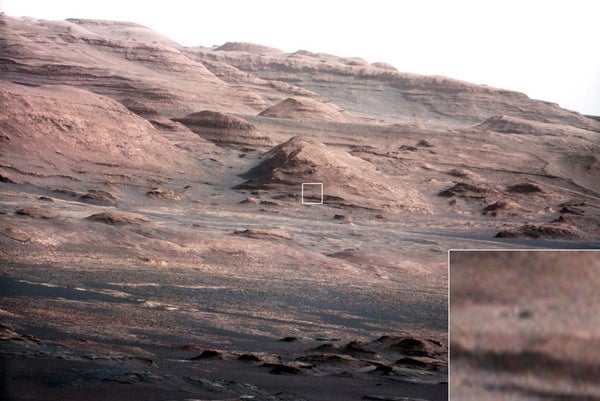
Like an adventurer of old, NASA's Curiosity rover is using its spyglass to scope out some as-yet unexplored environs.
The image above comes from Curiosity's 100-millimeter telephoto camera, which, according to NASA, has about three times the resolving power of any previous landscape camera deployed on the Red Planet.
The literally otherworldly landscape has been colorized both for visual appeal and to highlight geologic differences in the soil types. "It's probably a little bit more pastel and pinker than it would be to your eye," geologist Mike Malin said during an August 27 press briefing. His company, Malin Space Science Systems, built four of the cameras for the rover mission, including the Mars Descent Imager that documented Curiosity's landing in high-res color.
On supporting science journalism
If you're enjoying this article, consider supporting our award-winning journalism by subscribing. By purchasing a subscription you are helping to ensure the future of impactful stories about the discoveries and ideas shaping our world today.
For scale, Malin noted that the black dot in the center of the white square (blown up in detail, below right) is a boulder with roughly the same dimensions of the car-size Curiosity itself. The boulder is about 10 kilometers away at the base of Mount Sharp, the eventual destination for the rover and the planned focus of its exploration.