
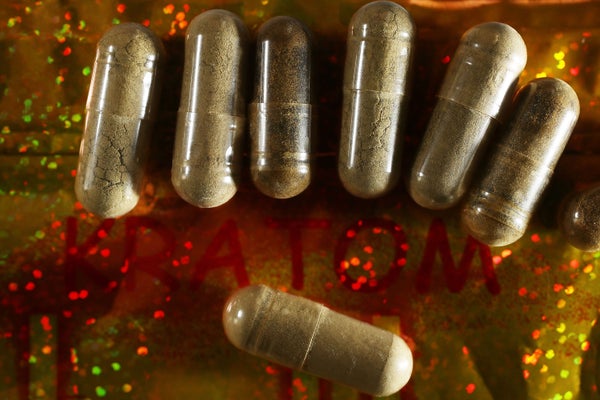
WASHINGTON — The Drug Enforcement Administration has reversed a plan to temporarily ban a plant that some users suggest could be an alternative to powerful and addictive opioid painkillers.
In a notice set to be published Thursday in the Federal Register, the agency said it was withdrawing its plan to add two psychoactive components of the plant, known as kratom, to the list of the most dangerous drugs.
Advocates urging the DEA to leave kratom off its list of controlled substance have argued that it can be used as a nonaddictive painkiller or can help wean people off other, addictive pain medications. Some lawmakers also complained that the DEA wasn’t being transparent in its effort to ban the plant.
On supporting science journalism
If you're enjoying this article, consider supporting our award-winning journalism by subscribing. By purchasing a subscription you are helping to ensure the future of impactful stories about the discoveries and ideas shaping our world today.
Adding kratom to the DEA’s list of schedule 1 drugs would define the plant as a drug with no currently accepted medical use and a high potential for abuse.
In a letter to the DEA last month, the American Kratom Association said the agency was being overly aggressive in categorizing kratom with other dangerous and highly addictive drugs, including a variety of synthetic drug compounds including synthetic marijuana and “bath salts.”
The association and the Botanical Education Alliance applauded the DEA’s reversal.
“Kratom is not an opiate. It is not addictive,” the groups said. “There is simply no basis whatsoever for the DEA to criminalize or regulate the responsible use by consumers of this product at a time when every federal effort targeting drugs should be focused on the ongoing scourge human of opioid addiction and death.”
Including kratom on the list of drugs that includes marijuana, heroin, and LSD would ban not only its use but likely strictly limit scientific studies for a possible medical use. Such a move would ban the plant for at least two years.
The drug agency said it will now wait for a recommendation from the Food and Drug Administration and take more comments from the public before deciding on kratom’s fate. The public has until Dec. 1 to comment.
For now that means that kratom, a little-known plant native to Southeast Asia, remains legal under federal law. Six states, however, have opted to ban kratom or its components.
Republished with permission from STAT. This article originally appeared on October 12, 2016