
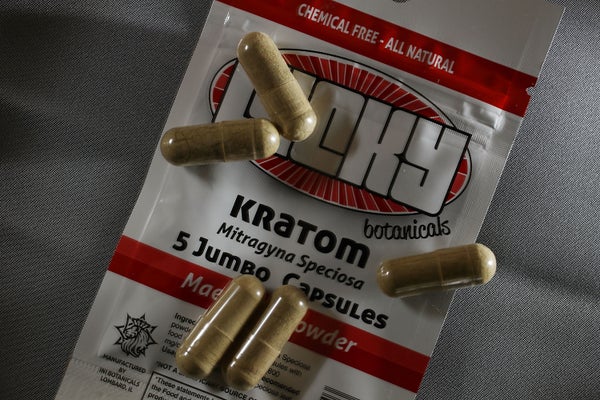
After announcing that the herbal supplement kratom would be made as illegal as heroin, the Drug Enforcement Administration is now reconsidering its decision, a US official familiar with the process told STAT on Wednesday morning.
In late August, the DEA announced that it would ban the substance for two or three years, a step that it could take unilaterally in a case it deems to be a “public health crisis.”
Kratom is a plant from Southeast Asia often used to self-treat opioid withdrawal, chronic pain, anxiety, and post-traumatic stress disorder. In making its decision, the DEA pointed to an increase in the number of calls to poison control centers related to kratom as a justification for acting swiftly, without seeking input from other government agencies—and with no opportunity for public comment.
On supporting science journalism
If you're enjoying this article, consider supporting our award-winning journalism by subscribing. By purchasing a subscription you are helping to ensure the future of impactful stories about the discoveries and ideas shaping our world today.
Now, however, after protests in front of the White House, a petition that garnered more than 130,000 signatures, and criticism from members of Congress, the DEA is reconsidering.
The ban could have taken effect as early as Sept. 30, but a DEA spokesman said that the order had not yet been signed. He could not say when it might be signed.
But an official familiar with the decision said that DEA was now considering instituting a period of public comment, or taking the more traditional approach to banning drugs, a process that involves both public input and detailed consultations with the Food and Drug Administration to determine whether the substance is in fact a health threat.
That could significantly delay the ban—or potentially lead to the reversal of the decision entirely.
Representative Mark Pocan, a Democrat from Wisconsin, who spearheaded a protest letter signed by several dozen lawmakers, spoke to the acting administrator of the DEA on Friday. “Since they didn’t initially go through the proper protocol for this procedure, now they’re trying to figure out how they’re going to implement some sort of public comment period,” said a spokesperson from Pocan’s office.
The DEA, however, has made no public comment to that effect, and in September, a spokesman told STAT the ban would take effect soon.
Senator Orrin Hatch, a Republican from Utah, spearheaded a similar bipartisan letter signed by eight other senators. His office specified that Hatch is not “pro-kratom,” but that he wanted to make sure that the DEA was not overstepping its bounds.
Given the outcry from thousands of kratom users—many of whom claim that the substance has saved them from addiction—a public comment period could potentially shift the federal government’s view on the plant. Researchers have also spoken out against the ban, saying that this will hamper lab work that might lead to new treatments for opioid addiction and chronic pain.
Republished with permission from STAT. This article originally appeared on October 5, 2016