
In 2008, pieces of diamond encased in rock descended from space and landed in the Nubian Desert of Sudan. And, according to a new study, these meteorite crystals provide the first physical evidence of an ancient lost building block from the dawn of the solar system.
In the study, a research team found that the Almahata Sitta meteorite once belonged to a protoplanet, one of tens of early worlds that experienced impacts and buildups to ultimately create the rocky planets in our solar system.
The diamond pieces inside the meteorite hold a compelling record of these protoplanets and their collisions, according to the study. Until now, the existence of these early worlds were only predicted by simulation models.
On supporting science journalism
If you're enjoying this article, consider supporting our award-winning journalism by subscribing. By purchasing a subscription you are helping to ensure the future of impactful stories about the discoveries and ideas shaping our world today.
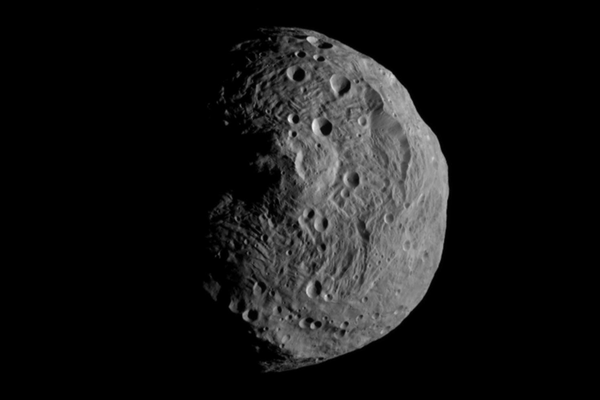
The diamond meteorite appears to have originated on a protoplanet between the size of the moon and Mars that collided with other objects during the first 10 million years of the solar system and no longer exists as a whole, according to a statement about the recent study. These crashes were big and energetic and, in the case of the diamond-laden meteorite’s parent body, caused catastrophic disruptions that the crystals captured.
Diamonds can act as time capsules: They trap nearby minerals during the formation process and, with their strength and stability, preserve material that scientists call inclusions. On Earth, diamonds are used to identify the structure and composition of the planet’s deep layers.
Therefore, the meteorite diamonds reveal information about their parent protoplanet. Analysis of the Almahata Sitta meteorite reveals that it is an achondrite, a rare type of space rock that comes from celestial bodies that are large enough to generate internal heat early in their history so as to produce metallic cores surrounded by rock. Therefore, the Almahata Sitta rock comes from a big asteroid or early planet, the research teamsaid.
Because this meteorite has high concentrations of carbon manifested as diamond and graphite, Almahata Sitta is a type of meteorite called a ureilite.
In the new study, lead author Farhang Nabiei, a materials scientist at École Polytechnique Fédérale de Lausanne, in Switzerland, and colleagues detailed what they found upon analyzing the inclusions inside the ureilite diamonds. The scientists used transmission electron microscopy to study the high-pressure environment that formed the crystals and altered the minerals around it, and determined that the composition and shapes of the inclusions inside the diamonds must have formed at high pressures (above 20 gigapascals).
This means the parent body of the Almahata Sitta meteorite was on the larger side of the protoplanet scale—Mercury-to-Mars size—and that this space rock’s remaining fragments are what’s left of this ancient celestial body, Nabiei said.
The study was published online April 17 in the journal Nature Communications.
Copyright 2018 LiveScience.com, a Purch company. All rights reserved. This material may not be published, broadcast, rewritten or redistributed.