
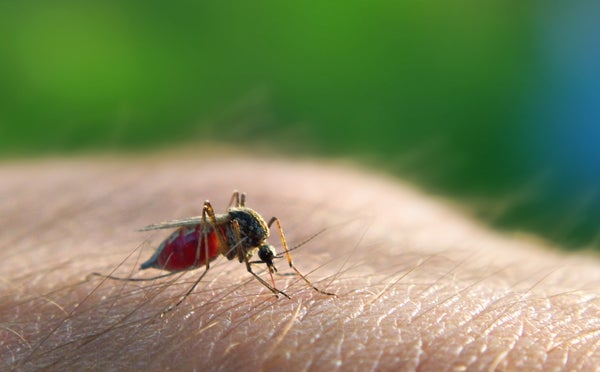

This episode is dedicated to my neighbor Todd. Whenever we are outside hanging out in the evening, and the sun starts to set and the mosquitoes begin to appear, I know that he will act as cover. I’ll escape with only a few or often no bites at all, while he, unfortunately, will end up coated in them.
Todd is not alone. Scientists estimate that 20% of people are more likely to attract mosquitoes and thus get bitten more often. But what makes some people more delicious (to mosquitoes) than others?
On supporting science journalism
If you're enjoying this article, consider supporting our award-winning journalism by subscribing. By purchasing a subscription you are helping to ensure the future of impactful stories about the discoveries and ideas shaping our world today.
What Attracts Mosquitoes to Some People More than Others?
Whether or not we are doomed to be highly attractive to mosquitoes is mostly determined by our genetics. For starters, the main way mosquitoes search for their next victim is by tracking down our carbon dioxide output, a telltale sign of a mammal’s existence. This means your metabolic rate, or the amount of CO2 your body releases as it burns energy, is a big factor when it comes to attracting mosquitoes.
To a large extent our metabolism is predetermined by our genetics but we do have the power to alter it somewhat. Drinking alcohol and exercising can both raise your resting metabolic rate and thus make you more attractive to mosquitoes. So going for a run and then stopping to have a beer at dusk is just asking to get bitten.
Mosquitoes also prefer pregnant women, a fitting prey since only female mosquitoes bite at all out of a need to develop fertile eggs. Pregnant women on average have higher metabolic rates than nonpregnant women. One study found pregnant women exhale 21% more CO2 than their nonpregnant counterparts. Pregnant women are also at another disadvantage: their body temperatures tend to be higher, another mosquito attractor.
»Continue reading “Do Mosquitoes Bite Some People More Than Others?” on QuickAndDirtyTips.com
