New Issue: Orbital Catastrophe Ahead? Read Now

Do Tattoos Boost Your Immune System?

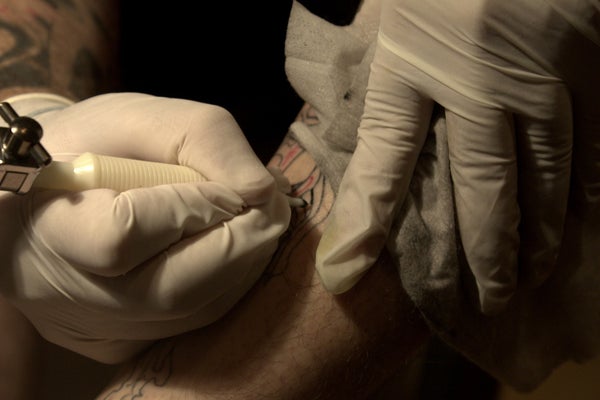
A series of popular science articles have recently been touting the health benefits of tattoos, specifically their ability to boost your immune system. But is a little ink really the cure for the common cold? 

Join Our Community of Science Lovers!


A series of popular science articles have recently been touting the health benefits of tattoos, specifically their ability to boost your immune system. Most are based on a studyled by Dr. Christopher Lynn at the University of Alabama. But is a little ink really the cure for the common cold?

The answer is, as is often the case, not as simple as many of these headlines might suggest. The study focused on a group of 29 people visiting a tattoo parlor in Alabama for a new tattoo. The researchers tested both the levels of cortisol—an indicator of our body’s stress response—and Immunoglobin A (an antibody that helps our body fight infections, called IgA for short) in each person before and after getting their new body art. In addition to monitoring our body’s response to stressful situations, cortisol also is known to act as an immunosuppressant, i.e. an inhibitor to our body’s natural defenses. The tests were meant to quantify any changes in the body’s immune system functions before and after getting a tattoo.


On supporting science journalism

If you're enjoying this article, consider supporting our award-winning journalism by subscribing. By purchasing a subscription you are helping to ensure the future of impactful stories about the discoveries and ideas shaping our world today.


The study revealed that those with no pre-existing tattoos experienced a greater strain on their immune system (a larger dip in their IgA levels) possibly due to greater feelings of stress. Those on their second, third (or twelfth) tattoo instead experienced a surge in their IgA immediately following their inking session. Their bodies appeared to be less stressed by the experience having gone through the process at least once before. The researchers titled the paper releasing their result “Tattooing to Toughen Up.”

»Continue reading on QuickAndDirtyTips.com

Subscribe to Support Independent Journalism

Great science journalism requires human expertise, time, effort and creativity. And it costs money. That’s why I and the journalists here at Scientific American hope you’ll join our community.

When you subscribe, you are supporting staff and freelance journalists who are passionate about telling science stories that are true, important and compelling. Our editors and reporters are often experts in their fields, which means they understand the nuances of big discoveries and can untangle the breakthroughs from the hype. With a subscription, you are also supporting rigorous fact-checking to ensure the words we publish are precise and accurate. And you’re supporting original illustrations, graphics and photos that bring you closer to an advanced laboratory, an ice sheet in Antarctica or a space mission in orbit. You’re helping us craft other types of high-quality journalism as well: Our newsletters are carefully written, edited and curated by staffers you have or will come to know and love. Our Science Quickly podcast is based on original reporting, collaboration with editors and scientists and exacting production.

Subscriptions keep this engine running so we can continue to deliver thoughtful, rigorous and independent science journalism to you. In an era of viral misinformation, this work is crucial. If you value what we do, I hope you’ll consider joining us as a subscriber

Thank you,

Jeanna Bryner, Editor in Chief, Scientific American

Subscribe