
The short answer is yes: certain brain regions do indeed consume more energy when engaged in particular tasks. Yet the specific regions involved and the amount of energy each consumes depend on the person’s experiences as well as each brain’s individual properties.
Before we delve into the answer, it is important to understand how we measure a brain’s energy expenditure. Picture the colorful brain images researchers use to display neural activity. The colors typically represent the amount of oxygen or glucose various brain regions use during a task. Our brain is always active on some level—even when we are not engaged in a task—but it requires more energy to accomplish something that demands concentration such as moving, seeing or thinking. A simple example is that our primary visual cortex lights up more in brain scans—consuming more energy—when our eyes are open than when they are closed. Similarly, our primary motor cortex uses more energy if we move our hands than if we keep them still.
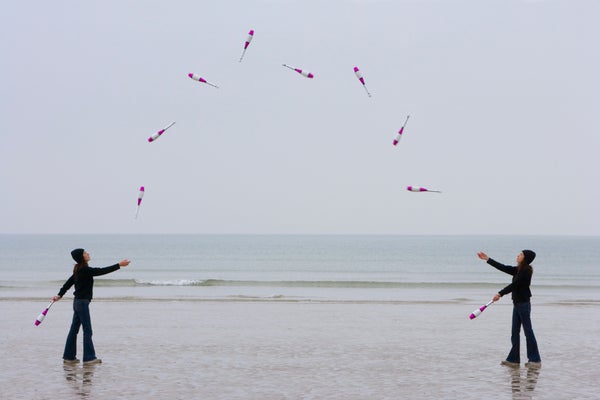
Say you are learning a new skill—how to juggle or speak Spanish. Neuroscientists have made the fascinating observation that when we do something completely novel, a broad range of brain areas becomes active. As we become more skilled at the task, however, our brain becomes more focused: we require only the essential brain regions and need increasingly less energy to perform that task. Once we have mastered a skill—we become fluent in Spanish—only the brain areas directly involved remain active. Thus, learning a new skill requires more brainpower than a well-practiced activity.
On supporting science journalism
If you're enjoying this article, consider supporting our award-winning journalism by subscribing. By purchasing a subscription you are helping to ensure the future of impactful stories about the discoveries and ideas shaping our world today.
But even here there are no hard-and-fast rules across individuals because every person has a variety of strengths and every brain is wired differently. In other words, no single activity will require the same amount of energy for everyone. One person may have a knack for singing, whereas another person may struggle to stay on key regardless of how much he or she practices. If a person is tone deaf, for instance, he or she will likely always expend more energy than a naturally good novice singer would.
Overall, though, on an individual level, our brain adapts and becomes more efficient as we gain mastery. We build new connections among neurons to keep pace with the greater demand on our neural resources. As our skill level grows in a particular area, our brain will inevitably require less energy to perform that task.
Question submitted by Carlos Augusto Manacorda, Buenos Aires
Do you have a question about the brain you would like an expert to answer? Send it to Editors@sciam.com