
Police officers investigating a crime may hesitate to interview drunk witnesses. But waiting until they sober up may not be the best strategy; people remember more while they are still inebriated than they do a week later, a new study finds.
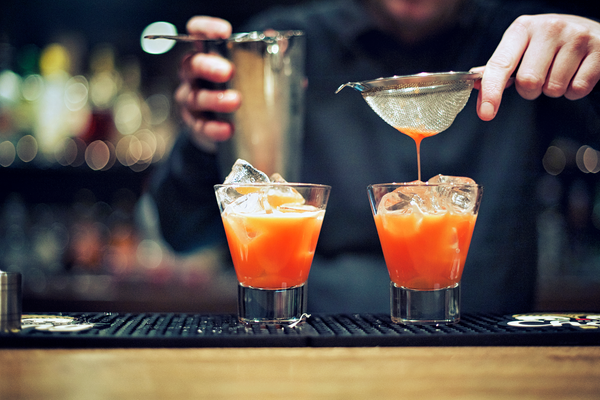
Malin Hildebrand Karlén, a senior psychology lecturer at Sweden’s University of Gothenburg, and her colleagues recruited 136 people and gave half of them vodka mixed with orange juice. The others drank only juice. In 15 minutes women in the alcohol group consumed 0.75 gram of alcohol per kilogram of body weight, and men drank 0.8 gram (that is equivalent to 3.75 glasses of wine for a 70-kilogram woman or four glasses for a man of the same weight, Hildebrand Karlén says). All participants then watched a short film depicting a verbal and physical altercation between a man and a woman. The researchers next asked half the people in each group to freely recall what they remembered from the film. The remaining participants were sent home and interviewed a week later.
The investigators found that both the inebriated and sober people who were interviewed immediately demonstrated better recollection of the film events than their drunk or sober counterparts who were questioned later. The effect held even for people with blood alcohol concentrations of 0.08 or higher—the legal limit for driving in most of the U.S. (Intoxication levels varied because different people metabolize alcohol at different speeds.) The results suggest that intoxicated witnesses should be interviewed sooner rather than later, according to the study, which was published online last October in Psychology, Crime & Law.
On supporting science journalism
If you're enjoying this article, consider supporting our award-winning journalism by subscribing. By purchasing a subscription you are helping to ensure the future of impactful stories about the discoveries and ideas shaping our world today.
The findings are in line with previous research, says Jacqueline Evans, an assistant professor of psychology at Florida International University, who was not involved in the new work. Evans co-authored and published a 2017 study in Law and Human Behavior that found similar results for moderately drunk witnesses. “Any effect of intoxication is not as big as the effect of waiting a week to question somebody,” she says.
The new study also found that some aspects of the drunk people’s recollections were not that different from those of the sober participants. For instance, both groups seemed particularly attuned to the details of the physical aggression portrayed in the film. “This research should at least make us more interested in what intoxicated witnesses have to say,” Hildebrand Karlén says, “and perhaps take them a bit more seriously.”