
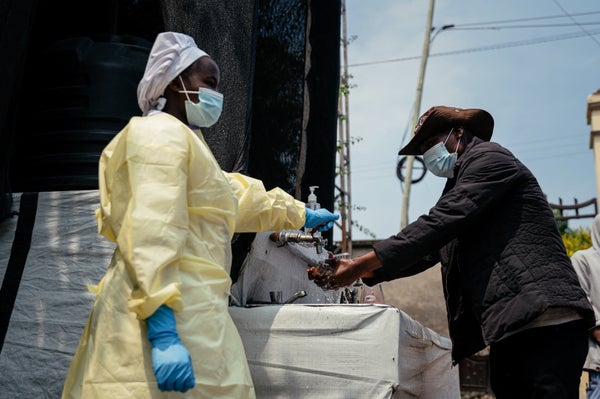
The U.S. on Monday announced new travel restrictions on visitors from three African nations—Uganda, South Sudan and the Democratic Republic of the Congo (DRC), which are at the center of an ongoing outbreak of Ebola virus that is believed to have killed at least 100 people. The ban, which doesn’t apply to U.S. citizens or permanent residents, will remain in place for 30 days. At least six Americans are known to have been exposed to the virus in the DRC; one of these people developed symptoms and has been evacuated to Germany, according to U.S. officials.
In an order signed by acting Centers for Disease Control and Prevention (CDC) head Jay Bhattacharya, the agency says the ban aims to minimize the potential for spillover into the U.S. and to buy officials time to assess the threat of the outbreak, which the World Health Organization (WHO) on Sunday declared a global health emergency. While there have been just a dozen or so confirmed infections, hundreds more are suspected.
The U.S. will also step up health screening, and the CDC will try to contact trace anyone who may have entered the country in recent weeks that could have had any exposure to Ebola. The risk to the general public remains low, the agency said in a press conference on Monday.
On supporting science journalism
If you're enjoying this article, consider supporting our award-winning journalism by subscribing. By purchasing a subscription you are helping to ensure the future of impactful stories about the discoveries and ideas shaping our world today.
The outbreak appears to be driven by the Bundibugyo virus, one of several viruses that can cause Ebola disease. The most notable symptom is viral hemorrhagic fever, which can cause life-threatening internal bleeding. This type of Ebola is similar to but not the same as the Zaire strain of the virus, which caused the 2013–2016 Ebola epidemic in West Africa that killed at least 11,325 people. The mortality rate for Bundibugyo is 25 percent to 50 percent, according to the CDC, and there is no vaccine or specific therapeutic for the disease.